



Prolozone Injections for Knee Pain - London Victoria
Knee Pain Treatment London
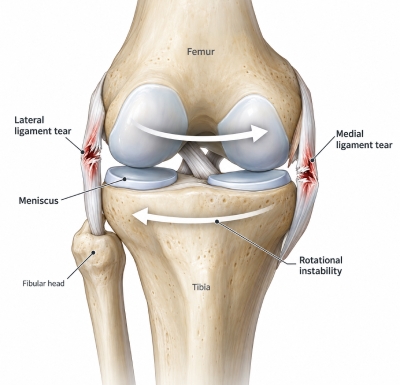
Knee Joint
Prolozone therapy combines a prolotherapy injection with medical ozone (O3)
delivered directly into the knee joint. The combination of dextrose and ozone makes
prolozone particularly effective for arthritic and degenerated knees – the ozone
component accelerates tissue oxygenation, reduces inflammation and supports
cartilage repair alongside the structural healing triggered by the dextrose.
How Prolozone Differs from Prolotherapy
Both prolotherapy and prolozone use dextrose to trigger a healing response in damaged tissue. Prolozone adds medical ozone to the injection, which has several additional effects: it improves oxygen utilisation in the joint, has a direct antiinflammatory action, and supports the repair of cartilage and soft tissue at a cellular level. For knees with a significant arthritic component, prolozone tends to produce faster and more pronounced relief than prolotherapy alone.
For patients whose knee pain is compounded by myofascial restrictions or nerve entrapment, we may also recommend Fascial Hydrodissection to release adhesions and restore normal movement.
Conditions Treated
- Knee osteoarthritis (mild to severe)
- Cartilage degeneration and joint space narrowing
- Meniscus tears and degeneration
- Synovitis and joint inflammation
- Ligament laxity and knee instability
- Post-surgical knee pain and stiffness

"Ive been in pain for over 2 years with my knees after 2 injections of prolozone my pain is less severe and im walking 100% better ,honestly give these guys ago they know what they are doing , its definetly working for me"
Tom Edwards
Read on
"I’m happy to share my experience!Last year, I could hardly walk. My knee was very painful after I had an accident. I damaged my ligament (MCL).Arlind Cela and Mohammed Mudasir Hussain were very good and very helpful. I had a few sessions of prolotherapy (prolozone) injections, and after that, I got better and better every day."
Maxima Mendoza
Read on
"My experience with Proback clinic was phenomenal.I had multiple issues Neck pain shoulder pain, knee pain,back pain and sciatica problem .I tried many other options in the past however ended up with little to no success. I found this clinic through social media.I was advised 24 treatments.Honestly after six treatments I felt it was Godsend.My hope of seeing myself better increased to the next level. I finished all the 24 treatments and it has made such a remarkable difference in my daily life.The pain has significantly decreased to almost nothing compared to what I begin with. The entire team are truly professional and caring.I really appreciate their dedication and service.I would like to especially thank Miss Blessy ,Miss Ayushi,Miss Kunjal and Mr Arlind (he is simply the best) for their excellence care and kindness. I highly recommend Proback Clinic to anyone for quality treatments."
Rukia Choudhury
Read on
What to Expect
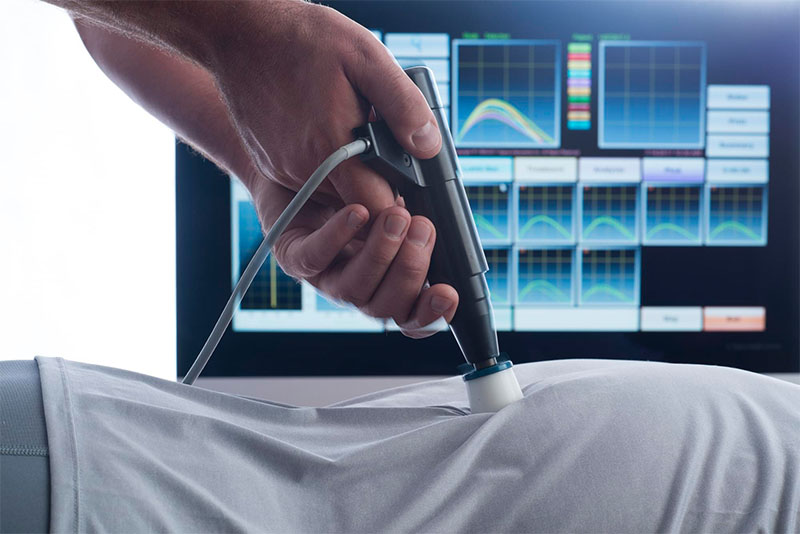
Prolozone injections are performed under ultrasound guidance at every session. The
procedure takes approximately 20 minutes. Most patients complete a course of three
to six injections spaced three to five weeks apart. A mild ache or warmth in the knee
for 24-48 hours after injection is normal and indicates the ozone is active.
Prolozone vs Cortisone for Knee Arthritis
Cortisone is anti-inflammatory but does not repair tissue – and repeated use is associated with cartilage breakdown. Prolozone works regeneratively: it reduces inflammation while simultaneously stimulating repair. For patients who have had cortisone and found the relief short-lived or diminishing, prolozone is a logical next
step.
Learn more about Prolotherapy vs Cortisone
Book a prolozone knee consultation from £110
- Includes examination
- X-ray if required
- A personalised treatment plan

Symptoms caused by Knee Instability
- Cracking sound with movement
- Knee pain
- Knee popping
- Knee swelling
- Loss of knee motion
- loss of muscle strength
- Muscle spasms
- Catching knee pain
- Referral lower leg pain
Knee pain often starts with a traumatic event, such as a fall or a stretched like a football injury. Often, over time, the knee joint becomes stiff and can also become swollen. Knee joint instability is one of the most common causes of knee pain.
In several cases, patients’ knee instability goes undiagnosed which leads them to unnecessary knee surgery.
In cases of instability, weakness or tears of the ligaments and tendon attachments surrounding the knee joint causes debilitating pain. Knee instability can also result in the kneecap tracking abnormally, causing pain and the cartilage under the kneecap to wear down.
Arthritic Pain
Osteoarthritis is one of the most diagnosed joint diseases in the world. Patients usually experience chronic joint pain, joint stiffness, leading to weakness.
What most people do not realize is that cartilage loss could be due to the long-term joint instability from unresolved ligament trauma. Every time the joint moves, a wear and tear of the cartilage happens leading to the development of osteoarthritis.
Our practitioners can assess your joints and see if Prolozone therapy can help you. Prolozone therapy could even help you in case of residual pain following a joint replacement.
Our specialists treat osteoarthritis of most joints, including knees, shoulders, fingers, toes, ankles, and wrists, as well as the spine.
Symptoms Caused by Arthritis
- Crepitation (cracking) with movement
- Deep, aching joint pain
- Grinding sensation
- Joint swelling and tenderness
- Loss of muscle strength
- Muscle tenderness
- Reduced range of movement
- Stiffness
How Ligaments and Tendons Injuries Lead to Degenerative Arthritis
Following an injury, like a fall, a sport injury or a car accident, it is very common for ligaments can become and injured. If left untreated, chronic joint instability can lead to destructive joint motion ultimately leading to extensive degenerative changes and osteoarthritis.
Often, destructive joint motion and the joint degenerative process can be prevented with appropriate intervention through Prolozone therapy.
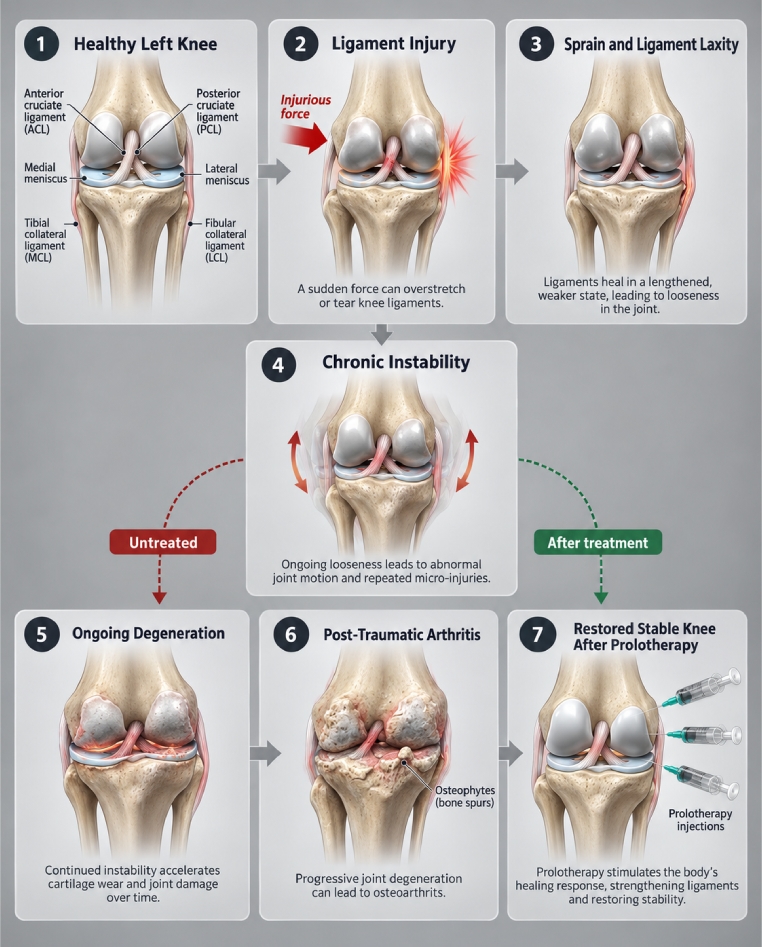
How Soft Tissue Injury Leads to Degenerative Arthritis?
Following a trauma, ligaments can become sprained and “loose”. If left untreated, the joint instability can result in destructive joint motion ultimately leading to extensive degenerative changes and osteoarthritis.
Our regenerative treatments can be used for arthritic joints as well, but early interventions can potentially save a lot time and improve quality of life significantly.
New view of Pathophysiology of Osteoarthritis
Often, osteoarthritis, or degeneration of a joint or spine, starts with ligament injury. Prolozone therapy could be a great solution to joints and ligaments injuries.
Hopefully, over time, traditional medicine will accept Prolozone therapy further as a part of regenerative medicine.
⇒ Ligament injury (laxity and partial tear)
⇒ Decreased tension on the bone at ligament-bone insertion site
⇒ Altered joint movement (instability) – increased force on subchondral bone
⇒ Subchondral bone sclerosis (thickening)
⇒ Reduction in shock absorbing bone capacity
⇒ Increase pressure between the cartilage surfaces
⇒ Cartilage wear and tear and subsequent joint degeneration worsens
⇒ Cartilage breaks off (loose bodies) and bone spurs form to try to stabilize joint
Regenerative injection technique such as Prolozone therapy helps stimulate repair and integrity of ligaments, ligament bone junction which is often the primary source of the pain.
Most importantly, Prolozone therapy initiates cartilage repair.
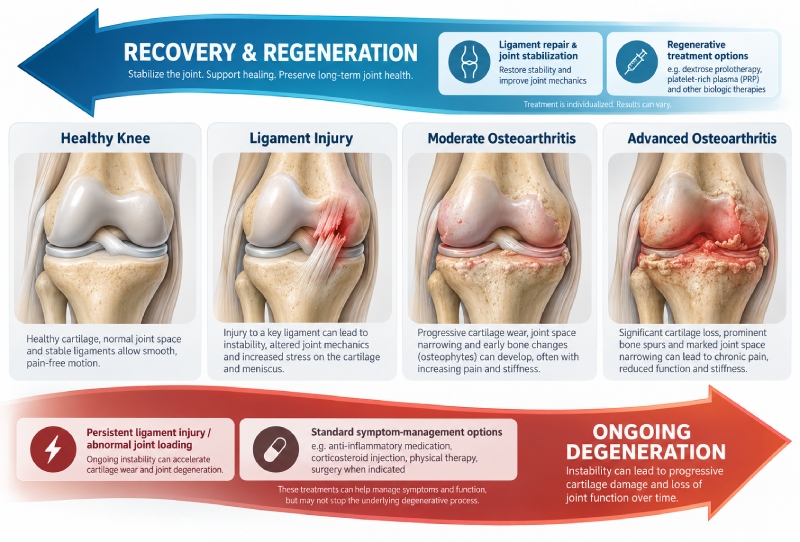
Prolozone Therapy for Arthritic Pain
Degenerative vs. Regenerative cascade. Traditional medical treatments often intensify the degenerative cascade whereas Prolozone therapy restores joint physiology and biomechanics.
Common Causes of Knee Joint Pain
Knee joint pain can arise from several conditions, including:
- Osteoarthritis
- Meniscus tears
- Ligament injuries
- Cartilage degeneration
- Overuse or repetitive stress injuries
If left untreated, these issues may progress and lead to chronic pain or restricted movement.
How Prolozone Therapy Works for Knee Joint Pain
Prolozone therapy for knee pain involves injecting a mixture of ozone gas, vitamins, and minerals into the affected area. This process:
- Increases oxygen supply to damaged tissues
- Reduces inflammation and swelling
- Stimulates the body’s natural repair mechanisms
- Enhances joint lubrication and mobility
Patients often report reduced pain and improved function after just a few sessions.
Benefits of Prolozone Therapy for Knee Joint Pain
Some key benefits include:
- Non-surgical treatment option
- Minimal downtime with quick recovery
- Long-term pain relief and improved stability
- Effective for arthritis, ligament injuries, and degenerative knee conditions
FAQs
No. Prolozone contains no steroids. It uses dextrose (a natural sugar) and medical ozone. It works by stimulating repair, not suppressing inflammation.
Many patients notice improvement within a week of their first injection. Results continue to develop across the course.
Prolozone has an excellent safety profile. Medical ozone has been used in clinical settings for decades. At Proback, all injections are performed under ultrasound guidance by certified practitioners.
Yes - in many cases, combining prolozone with targeted rehabilitation produces the best outcomes, as the injection creates the conditions for repair and physiotherapy helps restore function and strength.
"Ive been in pain for over 2 years with my knees after 2 injections of prolozone my pain is less severe and im walking 100% better ,honestly give these guys ago they know what they are doing , its definetly working for me"
Tom Edwards
Read on
"I’m happy to share my experience!Last year, I could hardly walk. My knee was very painful after I had an accident. I damaged my ligament (MCL).Arlind Cela and Mohammed Mudasir Hussain were very good and very helpful. I had a few sessions of prolotherapy (prolozone) injections, and after that, I got better and better every day."
Maxima Mendoza
Read on
"My experience with Proback clinic was phenomenal.I had multiple issues Neck pain shoulder pain, knee pain,back pain and sciatica problem .I tried many other options in the past however ended up with little to no success. I found this clinic through social media.I was advised 24 treatments.Honestly after six treatments I felt it was Godsend.My hope of seeing myself better increased to the next level. I finished all the 24 treatments and it has made such a remarkable difference in my daily life.The pain has significantly decreased to almost nothing compared to what I begin with. The entire team are truly professional and caring.I really appreciate their dedication and service.I would like to especially thank Miss Blessy ,Miss Ayushi,Miss Kunjal and Mr Arlind (he is simply the best) for their excellence care and kindness. I highly recommend Proback Clinic to anyone for quality treatments."
Rukia Choudhury
Read on
Use the form below to book a consultation.
Consultation includes examination, X-ray (if required) and results.
We typically reply within 60 minutes during opening hours.
What Our Patients Say
Helping Patients Become Pain-Free Since 2007
"Ive been in pain for over 2 years with my knees after 2 injections of prolozone my pain is less severe and im walking 100% better ,honestly give these guys ago they know what they are doing , its definetly working for me"
Tom Edwards
Read on
"I’m happy to share my experience!Last year, I could hardly walk. My knee was very painful after I had an accident. I damaged my ligament (MCL).Arlind Cela and Mohammed Mudasir Hussain were very good and very helpful. I had a few sessions of prolotherapy (prolozone) injections, and after that, I got better and better every day."
Maxima Mendoza
Read on
"My experience with Proback clinic was phenomenal.I had multiple issues Neck pain shoulder pain, knee pain,back pain and sciatica problem .I tried many other options in the past however ended up with little to no success. I found this clinic through social media.I was advised 24 treatments.Honestly after six treatments I felt it was Godsend.My hope of seeing myself better increased to the next level. I finished all the 24 treatments and it has made such a remarkable difference in my daily life.The pain has significantly decreased to almost nothing compared to what I begin with. The entire team are truly professional and caring.I really appreciate their dedication and service.I would like to especially thank Miss Blessy ,Miss Ayushi,Miss Kunjal and Mr Arlind (he is simply the best) for their excellence care and kindness. I highly recommend Proback Clinic to anyone for quality treatments."
Rukia Choudhury
Read on
Award-Winning Treatments
Advanced Regenerative Medicine & Non-Surgical Treatments




Patient Stories
9/10 Recommend Us


SYMPTOMS
Knee Pain

TREATMENT
Prolozone therapy
Robert was told knee replacement was his only option. After Prolozone treatment he was 70-80% better and avoided surgery entirely.
SYMPTOMS
Knee Pain
TREATMENT
Prolozone therapy
Donald had Grade 4 knee deterioration and osteoarthritis. As a competitive hurdler he needed his knees to perform. After Prolozone treatment he went on to win a Bronze medal at the European Masters Championships.
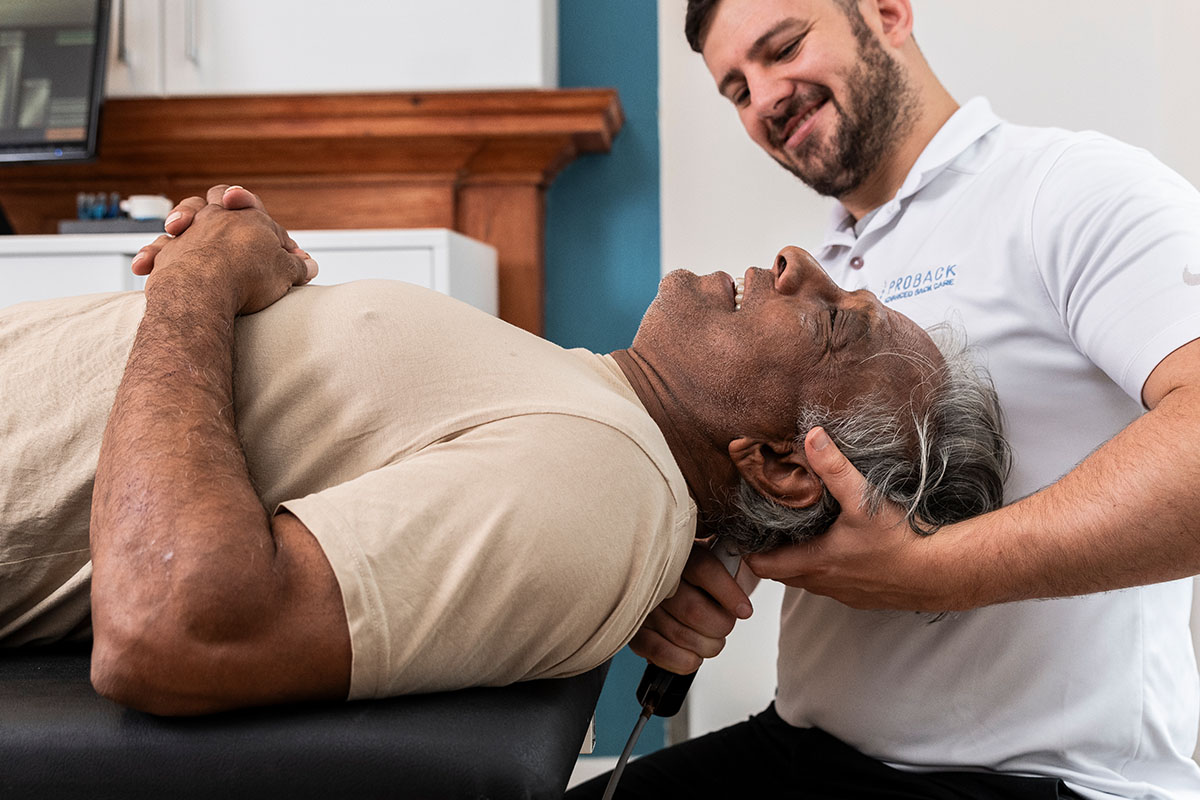
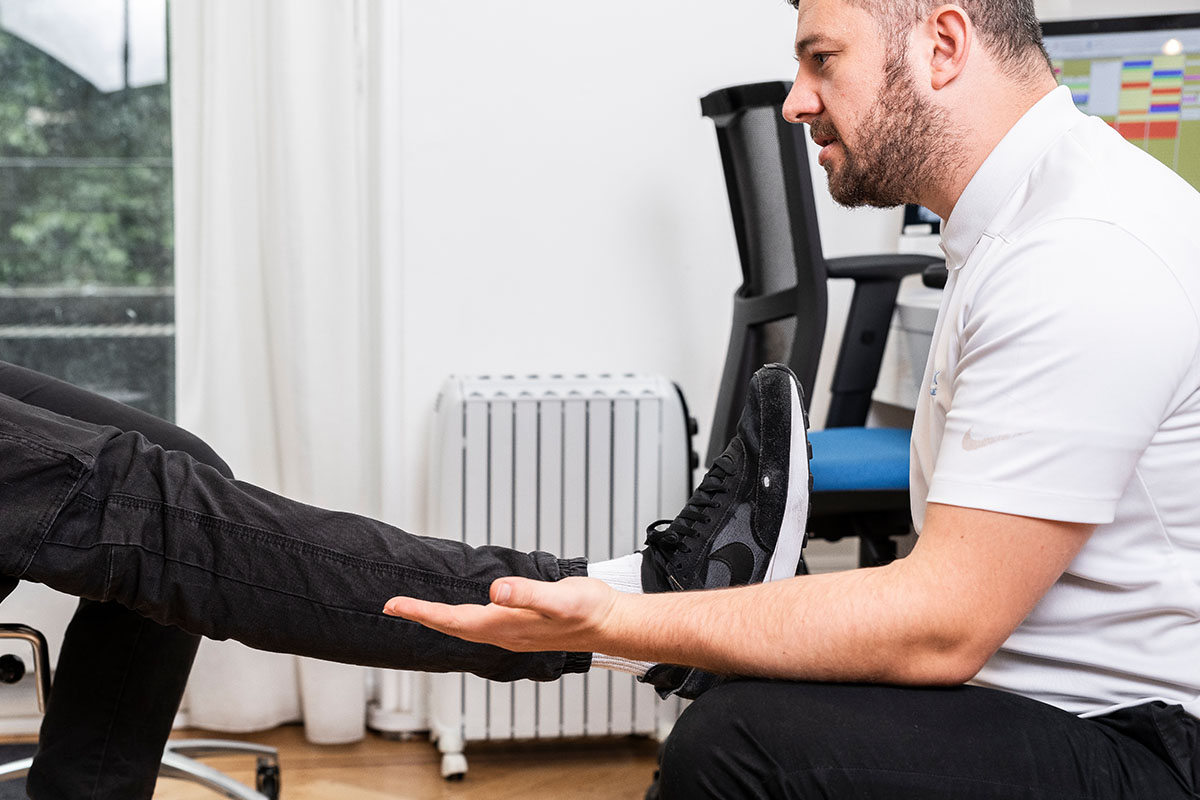
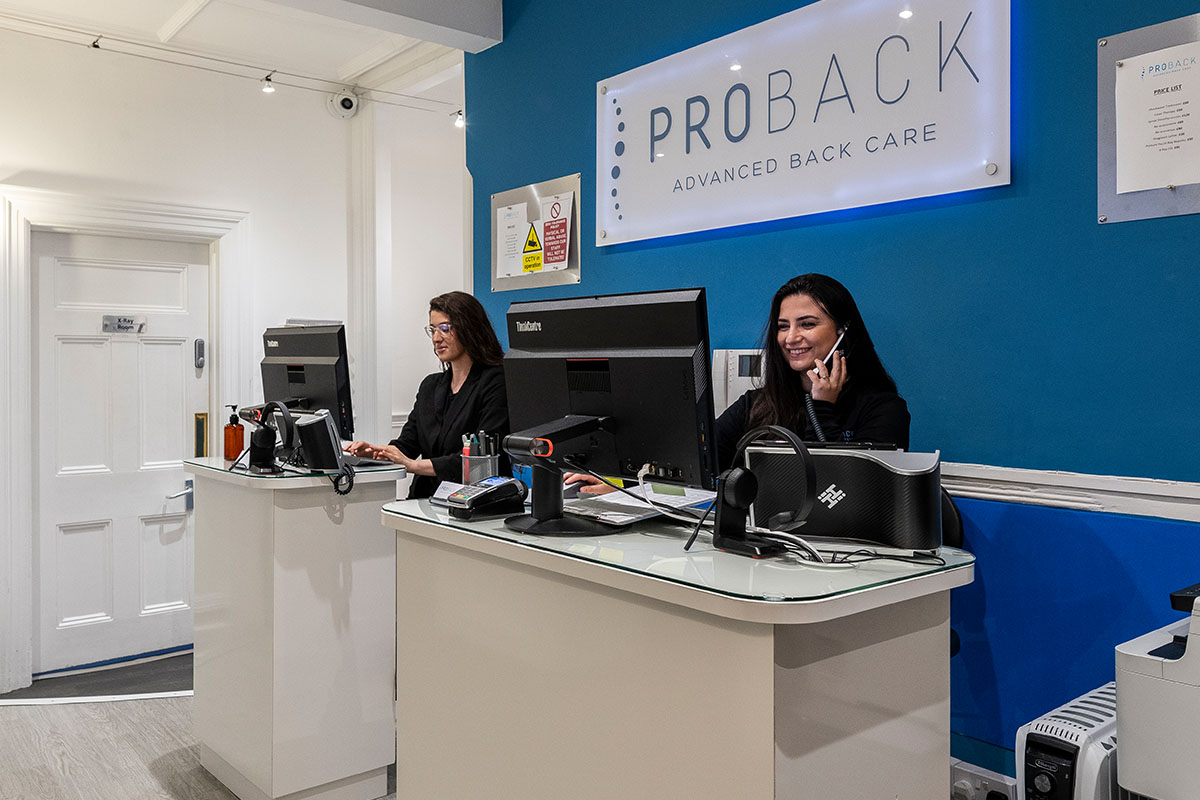
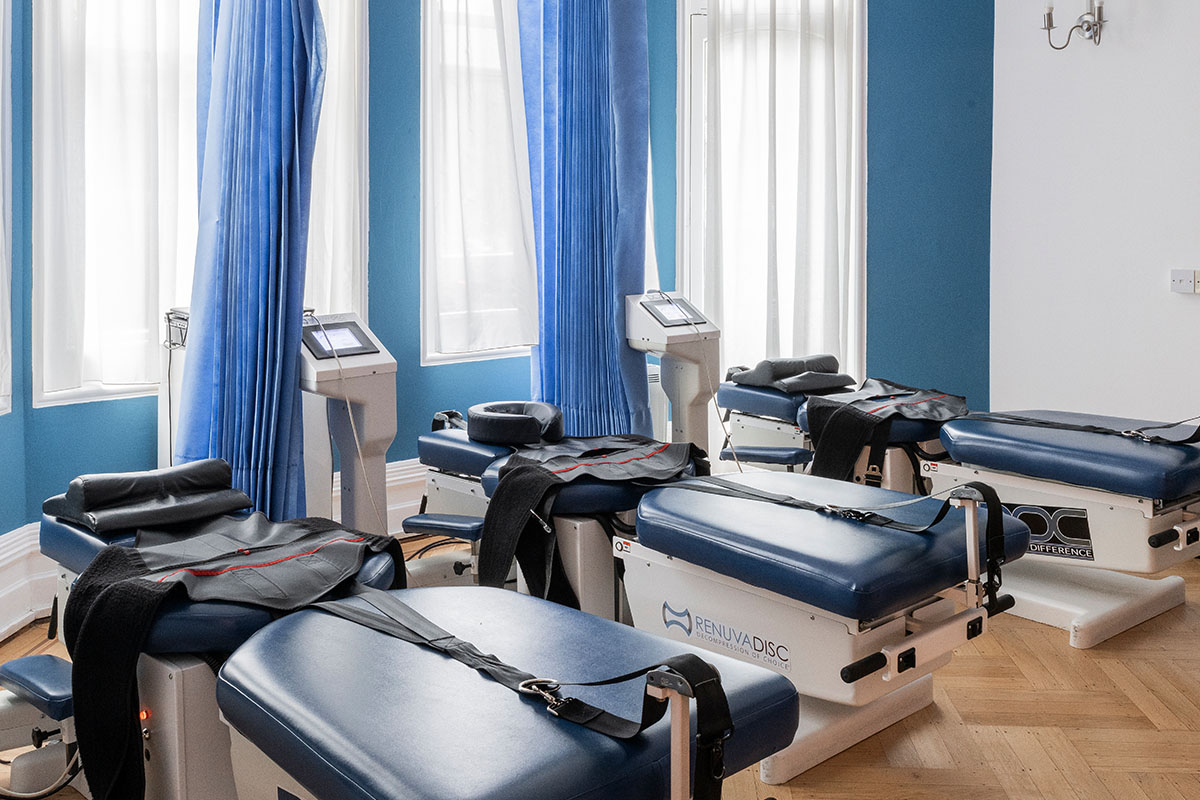
Inside Proback
5 Minutes From London Victoria Station









"Ive been in pain for over 2 years with my knees after 2 injections of prolozone my pain is less severe and im walking 100% better ,honestly give these guys ago they know what they are doing , its definetly working for me"
Tom Edwards
Read on
"I’m happy to share my experience!Last year, I could hardly walk. My knee was very painful after I had an accident. I damaged my ligament (MCL).Arlind Cela and Mohammed Mudasir Hussain were very good and very helpful. I had a few sessions of prolotherapy (prolozone) injections, and after that, I got better and better every day."
Maxima Mendoza
Read on
"My experience with Proback clinic was phenomenal.I had multiple issues Neck pain shoulder pain, knee pain,back pain and sciatica problem .I tried many other options in the past however ended up with little to no success. I found this clinic through social media.I was advised 24 treatments.Honestly after six treatments I felt it was Godsend.My hope of seeing myself better increased to the next level. I finished all the 24 treatments and it has made such a remarkable difference in my daily life.The pain has significantly decreased to almost nothing compared to what I begin with. The entire team are truly professional and caring.I really appreciate their dedication and service.I would like to especially thank Miss Blessy ,Miss Ayushi,Miss Kunjal and Mr Arlind (he is simply the best) for their excellence care and kindness. I highly recommend Proback Clinic to anyone for quality treatments."
Rukia Choudhury
Read on
Use the form below to book a consultation.
Consultation includes examination, X-ray (if required) and results.
We typically reply within 60 minutes during opening hours.
Accreditations




How To Find Us
4 Evelyn Mansions,
Carlisle Place, Victoria,
London SW1P 1NH
Opening Times
Weekdays 8.30am - 8pm
Saturday 9am - 3pm

020 7976 6648


