



Slipped Disc Treatment
Up to 90% Success Rate
Specialist Slipped Disc Treatment London
We offer treatment for slipped discs in London at The Proback Clinic in Victoria. A slipped disc or bulging disc is popular terms for a medical condition known as a Herniated Vertebral Disc and is commonly associated with chronic, severe pain and radiating pain either down the leg when the damage is in the lower back or down the arm when the damage is in the neck.
Structure of a Vertebral Disc
The vertebrae in the spine are separated by a form of cartilage, known as discs. These discs contain a central cushioning material similar to gel known as the nucleus, and act to protect the vertebrae from the impact of daily activities such as walking, running, sitting and lifting; this gel is wrapped in multiple layers of ligament rings known collectively as the annulus.

"I have slipped disc I've been In too many treatment centers in London none worked better than proback clinic for me. Mid of 2023 i stop working i thought i will never walk again I reached the point where I was barely able to walk i was in bed for months then I stumbled upon this clinic online, after the treatment I feel that I have better sleep, I'm able to walk do my daily activities take my kids out, go out with my friends again and will go back to work after my treatment finishes.thank you very much for all staff who supported me all the way specially Katerina Dipa and Nehir i am not good with names my apologie."
Nimo Ali
Read on
"Unfortunately, I sustained a slipped disc in my back from deadlifting at the gym. The GP said the injury would take no longer than six weeks to heal and that it would heal on its own. 12 weeks later, I was still in agony and so I decided to go to a chiropractor at Proback.I attended three sessions, where I had a consultation and x-ray in the first, treatment in the second and I went back for further treatment in the third to check on my progress. I was given specific exercises to strengthen the weaker areas surrounding my injury, which I did not get through the GP. Three weeks later, I have now played football for the first time in over three months AND gaining my strength back at the gym already.The team at Proback were amazing. From the girls at reception, to Nicole (my practitioner), who was not only great at her job and was able to have a laugh, but also from a sporting perspective, offered that little extra advice which was much appreciated, to David, who did the dirty work of rearranging my spine which was an experience I have never had before to say the least.After a solid experience, I will definitely be returning ever so often to maintain healthy bodily functions due to my strenuous job and exercise regimes.Thank you!"
Mark
Read on
"My mother had severe disc and back trouble for years. Out of desperation we tried to get her some help and come across Proback online. My mother was treated so much care and was really listened to by the consultant who saw her (Yohanis Kidane) who was very considerate and treated her with so much respect. She then saw Arlind Cela who went through her results with her and again was treated with the utmost respect and care. They actually diagnosed after nearly 2 years that this issue was a worn hip and not the back. They didn't try and push us into any unnecessary treatment and supplied us with a full report and copies of the relative X-Rays. Very honest people to deal with and along with all the staff including the receptionist (Nesa) who could not of been any more helpful. Although they couldn't cure the issue they gave us all the information we needed to take this issue to the correct medical team."
Alan Dugdale
Read on
Causes of Disc Damage
The disc material can be damaged by sudden trauma or worn down over time through poor biomechanics, incorrect posture, or sitting for long periods. The damage caused means the discs can’t give the vertebrae the right level of protection. This then puts pressure on the rest of the spine, or in some cases on a specific nerve; this damage to the disc is known as a herniation.
When discs are damaged there are multiple ways in which pain can be generated.
- When a disc tears under pressure, this can create a bulge which then puts pressure on the nerves adjacent.
- Tears in the outer fibres of a disc are directly innervated and therefore pain is felt without the need for pressure on the adjacent nerve (can create pain patterns that MRIs don’t necessarily identify).
- Inflammation caused by damage to the nucleus or annulus can leak inflammatory chemicals which irritate the adjacent nerve (can create pain patterns that MRIs don’t necessarily identify).
- Collapsing or wedging of the disc can cause a direct physical entrapment of the nerve often on the opposite side to the bulge.
- Degenerative damage to the disc can cause a loss of disc height reducing the space, which causes entrapment of the nerve.
Symptoms of a Slipped Disc
As explained disc pain can be direct or indirect, but often the discomfort follows a nerve related pattern which has some specific tells.
- Pain is often initially sharp and can shoot down the arm or leg
- Muscle spasm often is accompanying meaning patients are braced, find it hard to straighten up or are listing to the side
- Chronic pain that is generally less intense but often with associated weakness, tingling or numbness into other areas of the body
- Severe cases can result in inability to contract muscles when weight bearing something known as a ‘drop foot’
The Different Types of Disc Problem
The term slipped disc is used colloquially but the specific nature of the disc problem matters clinically – both in terms of symptoms and in terms of which treatments are most appropriate:
Disc Bulge – the outer disc wall weakens and bulges outward without rupturing. The disc material remains contained. This is the most common and typically most treatable presentation.
Disc Herniation – the inner disc material (nucleus pulposus) pushes through a tear in the outer wall and may press against a nearby nerve root. This causes the characteristic leg pain and neurological symptoms associated with sciatica.
Disc Prolapse – a more significant herniation where a larger portion of the nucleus has pushed through the outer wall.
Disc Extrusion – the herniated material has completely broken free of the disc. More severe presentations may warrant surgical assessment, though many still respond to conservative regenerative treatment.
Disc Sequestration – a fragment of disc material has broken completely free and migrated within the spinal canal. Urgent specialist assessment is required.
At your consultation we review your imaging carefully and give you a clear picture of which type of disc problem you have and what the most appropriate treatment approach is for your specific presentation.
How Spinal Decompression Treats Slipped Discs
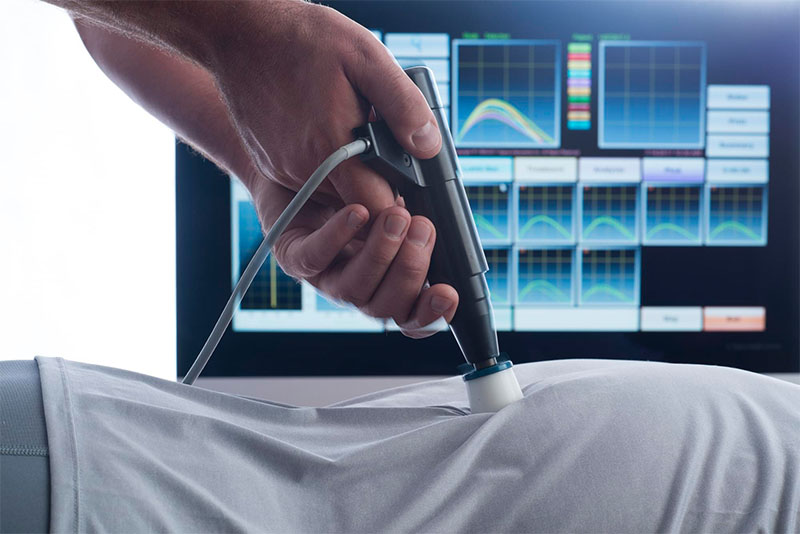
Spinal Decompression Therapy is our primary and most directly effective treatment for slipped disc presentations. It works through a computer controlled traction table that applies precisely calibrated distraction forces to the affected disc level.
This creates a negative intradiscal pressure – a gentle vacuum effect within the disc – that has two critical effects:
- It draws the herniated or bulging disc material away from the nerve root – directly reducing the mechanical compression that is causing the pain, sciatica and neurological symptoms.
- It draws vital nutrients, oxygen and hydration back into the dehydrated and damaged disc space – supporting the disc’s own healing and repair process from within.
Each session is precisely targeted to the specific disc level identified in your assessment. The procedure is completely non-invasive – no needles, no surgery and no recovery time. Most patients find the sessions very comfortable and many feel immediate relief of leg pain during the session itself.
How Prolozone and Prolotherapy Complement Spinal Decompression
Spinal Decompression addresses the mechanical compression component of a slipped disc. Prolozone and Prolotherapy address the biological component – the inflammation, tissue damage and instability that allowed the disc to herniate in the first place and that maintain symptoms alongside the mechanical pressure.
Prolozone delivers medical grade ozone and natural nutrients to the affected disc and surrounding structures – reducing inflammation around the nerve root, improving oxygenation within the disc and stimulating the body’s own repair process in the damaged disc tissue.
Prolotherapy strengthens the spinal ligaments and surrounding soft tissue structures that have been weakened – improving the stability of the affected segment and reducing the abnormal movement that contributed to the disc herniation.
Combining all three approaches – mechanical decompression, ozone regeneration and ligamentous strengthening – is where we consistently see our best and most lasting results for slipped disc patients.
Pricing
Our initial consultation is currently on special offer at £110 – reduced from £270 – and includes a full clinical examination, standing X-rays where required and a dedicated results appointment where your findings are explained in full and a personalised treatment plan with full pricing is presented before you commit to anything further.
Please call 0207 976 6648 for a personalised estimate.
Why Choose Proback?
Proback Clinic is the official UK training partner of the European School of Prolotherapy – founded by Dr Stephen Cavallino MD.
We are a multidisciplinary team including a Doctor of Chiropractic, Osteopath and HCPC registered physiotherapists – all under one roof in Victoria, Central London, 5 minutes from Victoria station.
Consistently rated Excellent on Trustpilot.
Call 0207 976 6648 or email victoria@proback.co.uk to book.

Our Slipped Disc Treatments
During our consultation process, we’ll decide which of our treatments for slipped discs would be best for you. Generally, the best treatment for slipped disc is a combination of shockwave therapy to help with mechanical dysfunction and mobility; which is combined with spinal decompression treatments to directly regenerate the disc material.
Shockwave therapy helps break down scar tissue in the affected area freeing up the movement of the muscles and joint. The increase in bio-mechanics can pump lost nutrients back into the disc, which in turn helps re-hydrate the nucleus that created the bulge. Correcting imbalances in the posture and muscle tone is also essential so that the discs aren’t continuing to be improperly compressed by the same forces that caused the initial annular damage.

Spinal Decompression Therapy
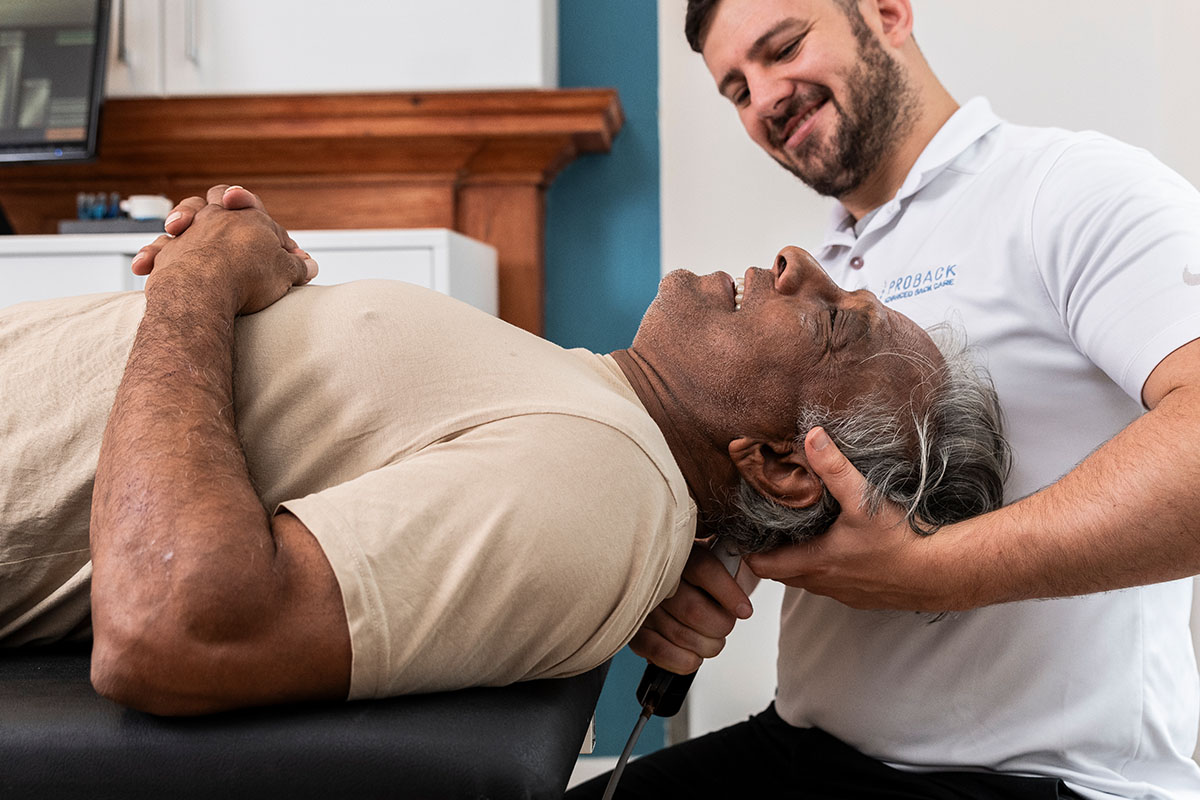
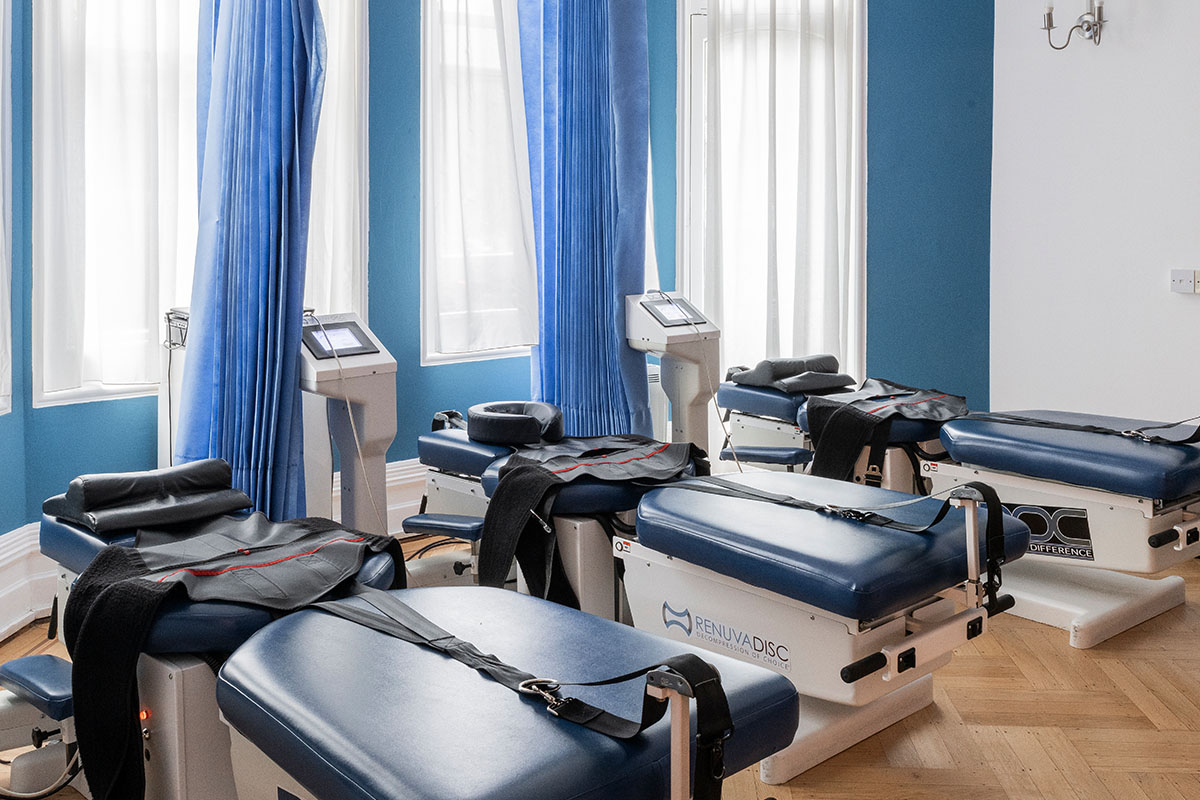
Spinal decompression can be used on either the neck or lower back, and uses a small amount of your body weight to apply a gentle traction force to the spine and treat a slipped disc. By applying an axial traction to the spine, we are able to put the spine into a negative pressure allowing it to decompress and most significantly allows nutrients, oxygen and fluids to flood back into the damaged discs. By using the latest generation of traction systems now known as decompression tables we can set specific computerised patterns of pull, highly specific to each case which research has suggested to be much more reliable than ‘old school’ IDD therapy tables.
Pumping the nutrients back into the disc is a vital part of treatment for a slipped disc, helping revitalise the healing environment within your spine. This allows for improvements to continue even after the slipped disc treatment has ended.
What to Expect From Slipped Disc Treatment at Proback Clinic
When you visit us in Victoria, London, your care plan is tailored to your unique condition and goals. The process typically includes:
- Comprehensive consultation – full medical history, physical assessment, and imaging where required.
- Accurate diagnosis – identifying whether your pain is caused by a slipped disc, herniated disc, or other disc injuries London.
- Targeted treatment – options may include specialist regenerative care , spinal decompression, regenerative injection therapy, Prolozone injections, and shockwave therapy for herniated disc.
- Progressive improvement – many patients report reduced nerve pain, improved mobility, and better sleep within weeks.
Because our treatments are non-invasive, you can usually return to daily activities straight after your session.
Who Benefits Most From Slipped Disc Rehabilitation London?
Our treatments are suitable for patients struggling with:
- Lower back pain radiating into the legs or buttocks
- Shooting, tingling, or numbness linked to a herniated disc London
- Weakness or limited mobility caused by nerve compression
- Recurring flare-ups after injury, sitting long hours, or physical strain
- Failed results with standard specialist care or medication
For many patients, slipped disc rehabilitation has been a turning point after months of frustration with traditional care.
Why Patients Choose Proback Clinic for Slipped Disc London
When searching for “slipped disc treatment near me” or a “herniated disc physiotherapist London”, patients trust Proback because we provide:
- Same-day and next-day appointments in London Victoria
- Evening and weekend availability
- Over 15 years’ experience treating slipped discs London and complex disc injuries London
- A unique multi-disciplinary approach combining physiotherapy, chiropractic, spinal decompression, and regenerative treatments
- A patient-first philosophy designed to avoid unnecessary surgery
Slipped Disc Treatment vs Other Options in London
Patients often comparetreatment for slipped discwith other options:
- Surgery– may help severe cases, but involves longer recovery and higher risks.
- Medication– reduces pain temporarily, but doesn’t fix the root cause.
- Physiotherapy care– useful for mobility, but may not fully resolve severe disc problems.
- Steroid injections– can reduce pain for a time, but do not promote long-term disc healing.
At Proback Clinic, our integrated approach combines slip disc treatment with advanced therapies like spinal decompression in London and shockwave therapy for herniated discs, offering both short-term relief and long-term recovery.
Slipped Disc Treatment in Victoria, London
If you’ve been searching for:
- Slipped disc physiotherapy London
- Herniated disc physiotherapy London
- Slipped disc rehabilitation London
- Slipped disc London
- Slipped discs London
- Herniated disc London
- Disc injuries London
- Shockwave therapy for herniated disc
- Spinal decompression London
- Lower back pain treatment London
- fix back pain in London
…then Proback Clinic in London Victoria provides everything under one roof. With a highly experienced team and a full range of advanced non-surgical therapies, we’re here to guide you from pain to long-term recovery.
FAQs
In the spine, discs act as a cushion between each vertebrae, protecting the spine from the impact of daily activities. If a disc becomes damaged or dehydrated, it can cause the disc to crack. The crack can create a bulge that can apply pressure to certain nerves. Nerves compression can cause pain, weakness, numbness or tingling in different areas of the body depending on which nerve has been affected.
Trauma, incorrect posture, being overweight, sitting or driving for long periods of time in a car or lorry, can speed up the degeneration of your discs. Lack of movement in an area of the spine causes a reduction in the amount of nutrients pumped through the discs; and this can cause them to become dehydrated and vulnerable to cracking.
Shockwave therapy uses a light tapping motion to break down scar tissue in a damaged area of the spine. This can help to improve the movement and flexibility of your spine. Increased movement in the spine helps to effectively pump nutrients back into the discs to rehydrate them.
Spinal decompression uses a small amount of your body weight to stretch the spine in a safe and gentle way. This helps to relieve pressure on the nerves, and allow for essential nutrients, oxygen and hydration to re-enter the disc space. This creates a better healing environment so your spine can begin to repair itself.
When the treatment is right for the patient, spinal decompression should not be a painful experience. The treatment is very safe, and most of our current patients find it a relaxing experience. Some patients with severely injured discs may find they feel tender during or after the session but this usually goes away once they’ve had a few treatments.
The majority of slipped disc presentations - even quite significant ones - can be successfully managed without surgery. Surgery is generally only necessary where there is progressive neurological deficit, loss of bowel or bladder function, or failure to respond to an adequate course of conservative treatment. We will always give you an honest clinical assessment of where you sit on that spectrum.
The body does have some capacity to reabsorb herniated disc material over time - particularly for smaller herniations. However this process is slow and unpredictable, and in the meantime the nerve damage and sensitisation can become established. Our treatments support and accelerate the healing process rather than waiting for spontaneous resolution.
Most patients require between 10 and 20 sessions for the best results, typically delivered three to five times per week in the initial phase then tapering as improvement is established. Your practitioner will recommend a personalised protocol at your results appointment.
Yes - persistent back pain after the leg symptoms have resolved often indicates that the underlying disc and ligamentous damage has not been fully addressed. Prolotherapy and Prolozone are particularly relevant in this scenario.
Yes - and we would encourage you to explore regenerative treatment while you wait. Many of our patients have avoided surgery entirely by the time their surgical appointment came around. Please call us on 0207 976 6648 to discuss your specific situation.
"I have slipped disc I've been In too many treatment centers in London none worked better than proback clinic for me. Mid of 2023 i stop working i thought i will never walk again I reached the point where I was barely able to walk i was in bed for months then I stumbled upon this clinic online, after the treatment I feel that I have better sleep, I'm able to walk do my daily activities take my kids out, go out with my friends again and will go back to work after my treatment finishes.thank you very much for all staff who supported me all the way specially Katerina Dipa and Nehir i am not good with names my apologie."
Nimo Ali
Read on
"Unfortunately, I sustained a slipped disc in my back from deadlifting at the gym. The GP said the injury would take no longer than six weeks to heal and that it would heal on its own. 12 weeks later, I was still in agony and so I decided to go to a chiropractor at Proback.I attended three sessions, where I had a consultation and x-ray in the first, treatment in the second and I went back for further treatment in the third to check on my progress. I was given specific exercises to strengthen the weaker areas surrounding my injury, which I did not get through the GP. Three weeks later, I have now played football for the first time in over three months AND gaining my strength back at the gym already.The team at Proback were amazing. From the girls at reception, to Nicole (my practitioner), who was not only great at her job and was able to have a laugh, but also from a sporting perspective, offered that little extra advice which was much appreciated, to David, who did the dirty work of rearranging my spine which was an experience I have never had before to say the least.After a solid experience, I will definitely be returning ever so often to maintain healthy bodily functions due to my strenuous job and exercise regimes.Thank you!"
Mark
Read on
"My mother had severe disc and back trouble for years. Out of desperation we tried to get her some help and come across Proback online. My mother was treated so much care and was really listened to by the consultant who saw her (Yohanis Kidane) who was very considerate and treated her with so much respect. She then saw Arlind Cela who went through her results with her and again was treated with the utmost respect and care. They actually diagnosed after nearly 2 years that this issue was a worn hip and not the back. They didn't try and push us into any unnecessary treatment and supplied us with a full report and copies of the relative X-Rays. Very honest people to deal with and along with all the staff including the receptionist (Nesa) who could not of been any more helpful. Although they couldn't cure the issue they gave us all the information we needed to take this issue to the correct medical team."
Alan Dugdale
Read on
Use the form below to book a consultation.
Consultation includes examination, X-ray (if required) and results.
We typically reply within 60 minutes during opening hours.
Award-Winning Treatments
Advanced Regenerative Medicine & Non-Surgical Treatments




Patient Stories
9/10 Recommend Us

SYMPTOMS
Back problems

TREATMENT
Prolozone therapy
Mrs Johnny had a complex back presentation including torn ligaments, a herniated disc and scoliosis. Prolozone treatment helped strengthen her back significantly and she has been able to walk a lot better.
SYMPTOMS
Stiffness from neck down, leg pain
sciatica in right leg
TREATMENT
Shockwave Therapy
Spinal Decompression
Hans presented with whole body stiffness, leg pain and right sided sciatica. After treatment his movement is better, energy levels are better, sleep has improved and pain significantly reduced.
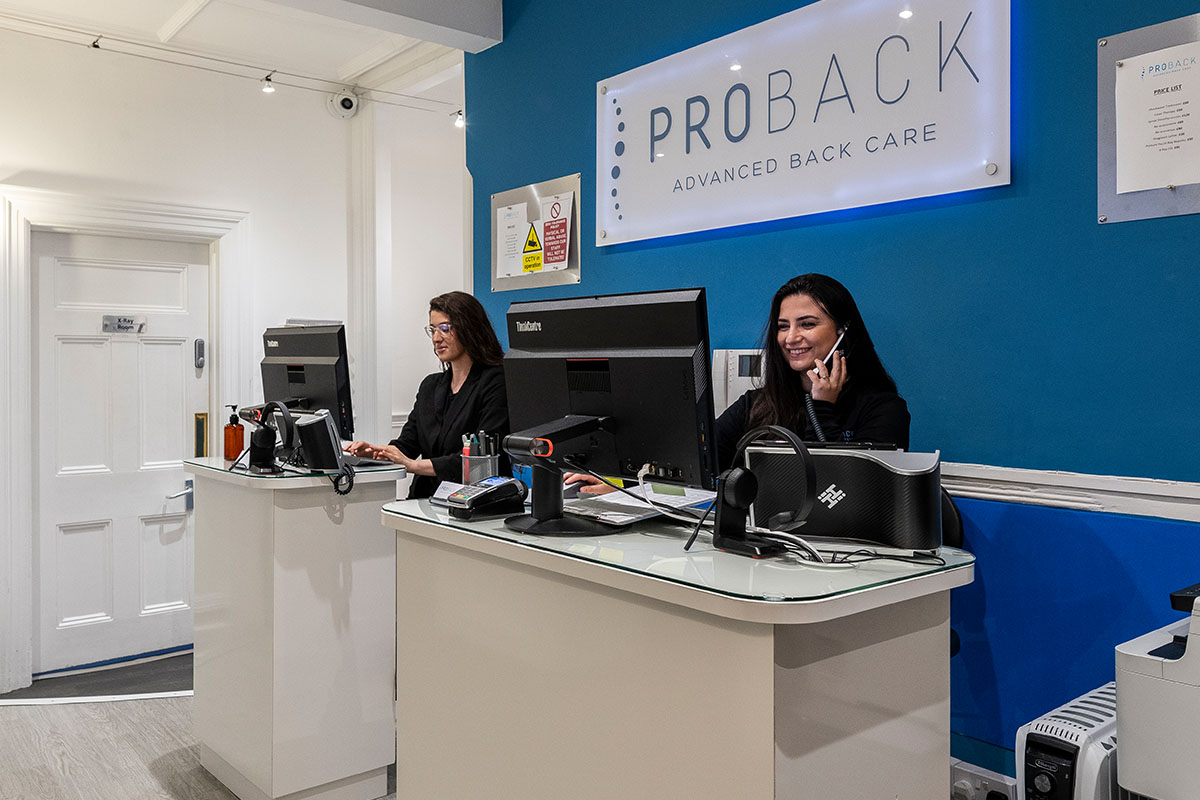
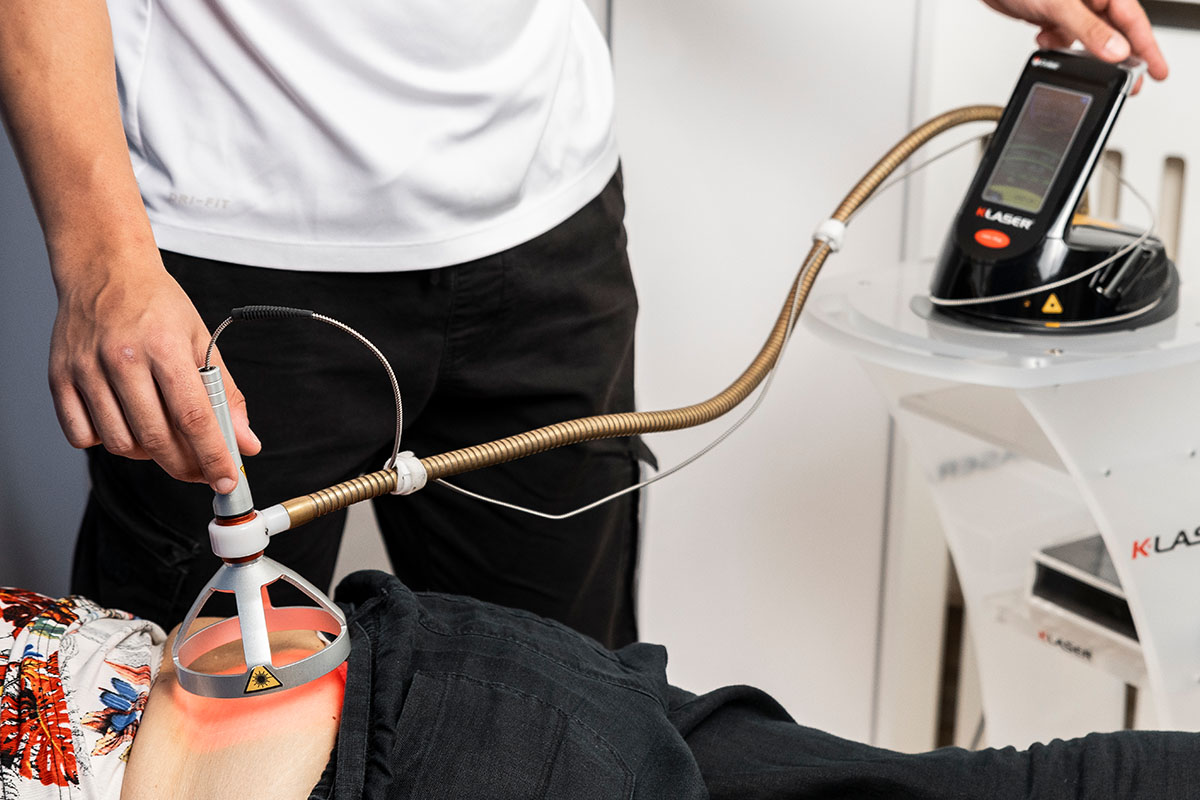
Inside Proback
5 Minutes From London Victoria Station









"I have slipped disc I've been In too many treatment centers in London none worked better than proback clinic for me. Mid of 2023 i stop working i thought i will never walk again I reached the point where I was barely able to walk i was in bed for months then I stumbled upon this clinic online, after the treatment I feel that I have better sleep, I'm able to walk do my daily activities take my kids out, go out with my friends again and will go back to work after my treatment finishes.thank you very much for all staff who supported me all the way specially Katerina Dipa and Nehir i am not good with names my apologie."
Nimo Ali
Read on
"Unfortunately, I sustained a slipped disc in my back from deadlifting at the gym. The GP said the injury would take no longer than six weeks to heal and that it would heal on its own. 12 weeks later, I was still in agony and so I decided to go to a chiropractor at Proback.I attended three sessions, where I had a consultation and x-ray in the first, treatment in the second and I went back for further treatment in the third to check on my progress. I was given specific exercises to strengthen the weaker areas surrounding my injury, which I did not get through the GP. Three weeks later, I have now played football for the first time in over three months AND gaining my strength back at the gym already.The team at Proback were amazing. From the girls at reception, to Nicole (my practitioner), who was not only great at her job and was able to have a laugh, but also from a sporting perspective, offered that little extra advice which was much appreciated, to David, who did the dirty work of rearranging my spine which was an experience I have never had before to say the least.After a solid experience, I will definitely be returning ever so often to maintain healthy bodily functions due to my strenuous job and exercise regimes.Thank you!"
Mark
Read on
"My mother had severe disc and back trouble for years. Out of desperation we tried to get her some help and come across Proback online. My mother was treated so much care and was really listened to by the consultant who saw her (Yohanis Kidane) who was very considerate and treated her with so much respect. She then saw Arlind Cela who went through her results with her and again was treated with the utmost respect and care. They actually diagnosed after nearly 2 years that this issue was a worn hip and not the back. They didn't try and push us into any unnecessary treatment and supplied us with a full report and copies of the relative X-Rays. Very honest people to deal with and along with all the staff including the receptionist (Nesa) who could not of been any more helpful. Although they couldn't cure the issue they gave us all the information we needed to take this issue to the correct medical team."
Alan Dugdale
Read on
Use the form below to book a consultation.
Consultation includes examination, X-ray (if required) and results.
We typically reply within 60 minutes during opening hours.
Accreditations




How To Find Us
4 Evelyn Mansions,
Carlisle Place, Victoria,
London SW1P 1NH
Opening Times
Weekdays 8.30am - 8pm
Saturday 9am - 3pm

020 7976 6648


