



Joint Hypermobility Or Instability Treatment
Up to 90% Success Rate
Joint Hypermobility Or Instability Treatment London
Joints are connected by ligaments which are connective tissue that ensures that the joints are held together tightly, and that muscles can contract and produce movement without creating unnecessary stress on the joints. Whenever ligaments are stretched or injured, joints tend to become hypermobile. The phenomenon of hypermobility may seem insignificant but over time, since ligaments are rich in nerve endings, they can transmit pain signals to the brain which ultimately can result in considerable chronic pain. Furthermore, joint hypermobility tends to promote joint degeneration which we all know as being arthritis.
Prolotherapy, which is injection of dextrose or glucose to the ligaments, has shown promising results in reducing joint hypermobility, reduce pain and improve function.
First, one must understand the relationship between joint hypermobility and why it is a hard condition to heal from.
Ligaments, are an integral part of our musculoskeletal system, and they have a highly level of blood flow until the age of about 15 years old. Unfortunately, the blood supply to ligaments reduces from the age of 15 until the age of about 25 years old. This means that, after the age or 25 years old, if a ligament is stretched and damaged from an injury or an accident, the ligaments risk becoming too loose and lose its property of stabilising a joint.
With Prolotherapy, the junction between ligaments and bone is being injected, and this tends to promote blood flow to the ligaments again in order to encourage ligament healing. It is possibly one of the only technique, or, the only therapy that shows promising results with joint hypermobility.
Why does physiotherapy or exercises do not work for joint hypermobility?
In mild cases of joint hypermobility, physiotherapy, or exercises after helps. But in moderate to more severe cases, physiotherapy or strengthening of muscles most of the times fail to help patients. This is simply due to the fact that muscles are not meant to hold bones together, it is the ligaments role.

Book A Consultation For Only £110
Use the form below to book a consultation.
Consultation includes examination, X-ray (if required) and results.
We typically reply within 60 minutes during opening hours.
FAQs
Joint hypermobility or instability refers to joints that move beyond their normal range of motion. This excessive movement can place added stress on surrounding muscles, ligaments, and tissues, often leading to pain, weakness, or a higher risk of injury.
Joint hypermobility can be genetic and present from birth, often due to naturally looser connective tissues. It can also develop after injuries, repeated strain, or poor muscle support around the joint. In some cases, it is associated with conditions like hypermobility spectrum disorders.
Common symptoms include joint pain, frequent sprains, a feeling that the joint may “give way,” muscle fatigue, and reduced stability during movement. Some patients may also experience clicking or popping sensations in the joints.


Award-Winning Treatments
Advanced Regenerative Medicine & Non-Surgical Treatments




Patient Stories
9/10 Recommend Us


SYMPTOMS
Back Pain

TREATMENT
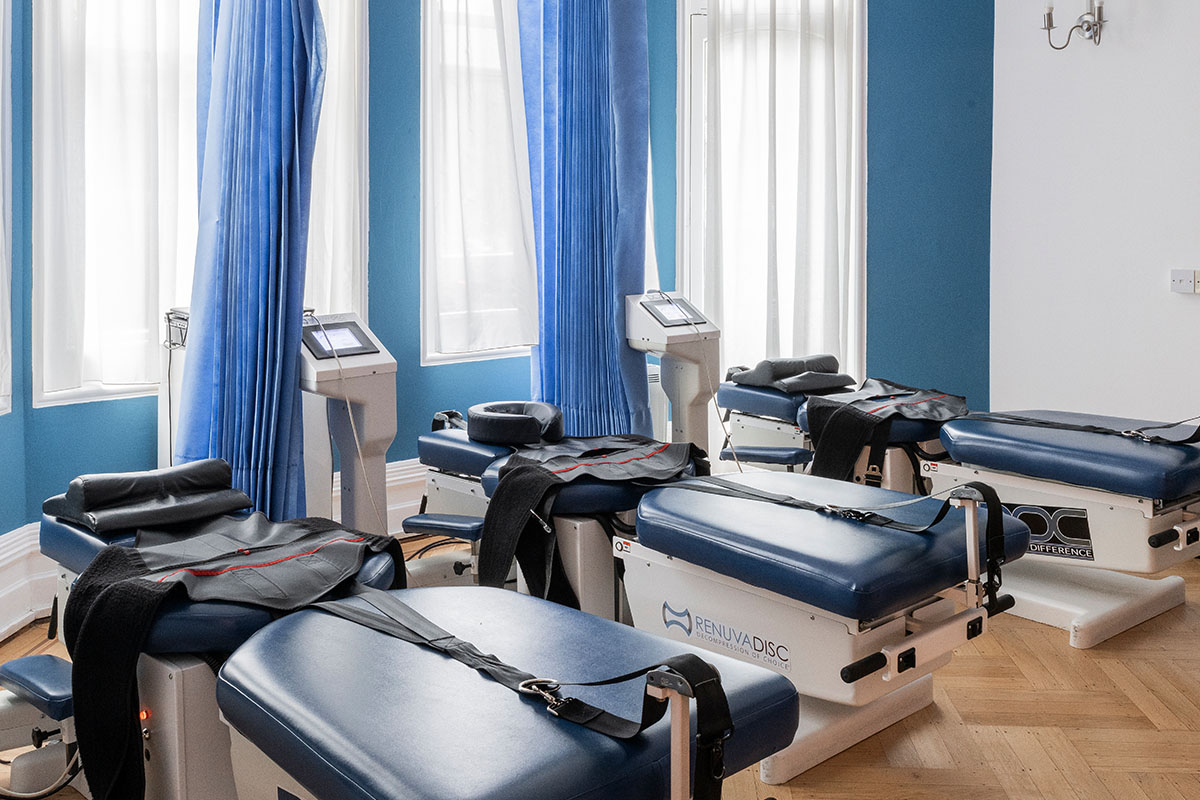
Spinal Decompression Therapy
Whilst working on her dad’s farm, 17 years ago, Sandra heard a loud crack in her back. Sandra had 6 steroid injections. She tried Physiotherapy, acupuncture and more but nothing helped. She kept getting worse and worse. The effect the pain was having spread beyond just Sandra. It was hurting everyone who loved her.
Inside Proback
5 Minutes From London Victoria Station









Accreditations




How To Find Us
4 Evelyn Mansions,
Carlisle Place, Victoria,
London SW1P 1NH
Opening Times
Weekdays 8.30am - 8pm
Saturday 9am - 3pm

020 7976 6648


