


Is Shockwave Therapy Good for a Torn Ligament?
When ligament injuries strike—whether from sport, exercise, a fall, or overuse—many people across the UK immediately ask: Is shockwave therapy good for a torn ligament?
This is one of the most searched musculoskeletal recovery questions in Google’s “People Also Ask” section because ligament tears can be painful, slow to heal, and disruptive to daily life. Whether you are dealing with an ankle ligament injury, knee sprain, shoulder instability, or chronic tendon-ligament damage, understanding whether Extracorporeal Shockwave Therapy (ESWT) can help is crucial.
In this expert guide, we’ll cover:
- What shockwave therapy is
- Whether it works for torn ligaments
- Partial tear vs complete tear outcomes
- Benefits, risks, and alternatives
- NHS vs private treatment options in the UK
- When mobile healthcare and at-home nursing support may help
- Recovery optimisation strategies
If you’re exploring recovery solutions, rehabilitation support, or post-treatment care in London, professional services such as private home healthcare from Proback can also support broader musculoskeletal rehabilitation and recovery journeys.

What Is a Torn Ligament?
A ligament is a strong band of connective tissue that links bones together and stabilises joints. Ligaments are essential for:
- Joint stability
- Movement control
- Injury prevention
Common Torn Ligament Injuries Include:
- ACL tear (Anterior Cruciate Ligament) – knee
- MCL tear (Medial Collateral Ligament) – knee
- ATFL tear (Anterior Talofibular Ligament) – ankle
- Rotator cuff-associated ligament strain – shoulder
- Wrist ligament tears
Torn Ligament Symptoms
- Sharp pain after injury
- Swelling
- Bruising
- Joint instability
- Reduced movement
- Difficulty bearing weight
Ligament injuries are usually classified as:
Grade 1:
Mild stretch
Grade 2:
Partial tear
Grade 3:
Complete rupture
What Is Shockwave Therapy?
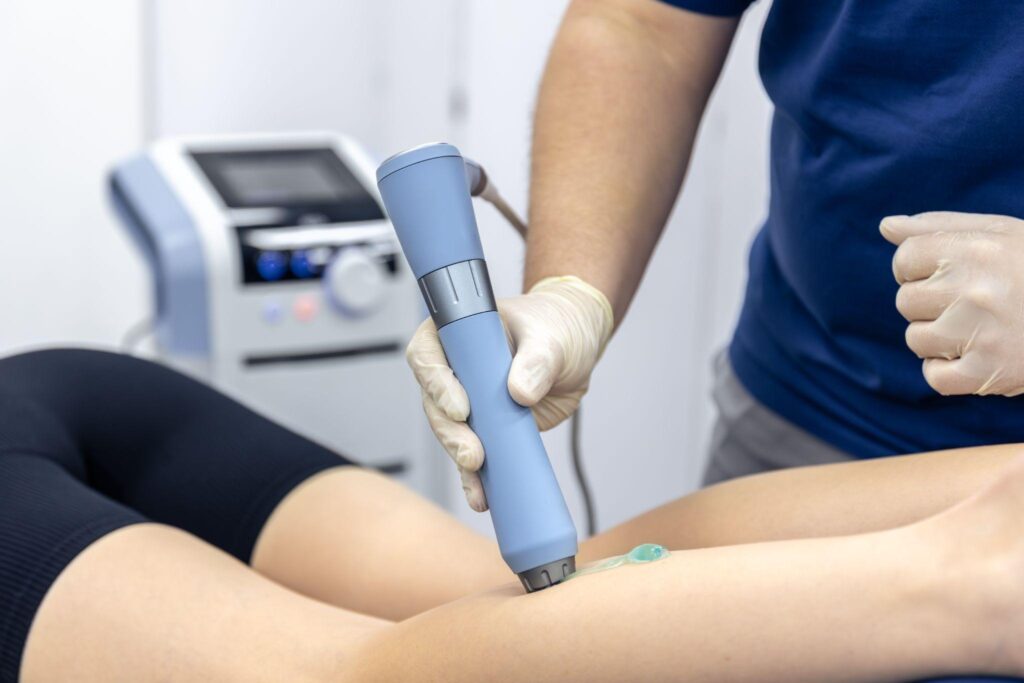
Shockwave therapy (ESWT) is a non-invasive treatment that uses acoustic pressure waves to stimulate healing in damaged soft tissues.
Originally used for kidney stones, it is now widely used in orthopaedics, sports medicine, and physiotherapy.
Types of Shockwave Therapy:
1. Focused Shockwave Therapy
Targets deeper tissues with precision
2. Radial Shockwave Therapy
More superficial and broader area treatment
How Does Shockwave Therapy Work for Ligament Injuries?
Shockwave therapy may help ligament healing by:
Stimulating Blood Flow
Ligaments often have poor blood supply, especially around joints. Shockwaves may encourage neovascularisation (new blood vessel formation).
Triggering Tissue Regeneration
It can stimulate fibroblast activity, collagen production, and cellular repair.
Breaking Down Chronic Scar Tissue
For long-term injuries, scar tissue can impair healing.
Reducing Pain
By altering nerve sensitivity and promoting biological repair.
Is Shockwave Therapy Good for a Torn Ligament?
Short Answer:
Yes—for some torn ligaments, particularly partial tears or chronic ligament injuries, shockwave therapy can be beneficial as part of a broader rehabilitation plan.
However:
It is generally NOT a standalone solution for complete ligament ruptures requiring surgery.
Best Cases Where Shockwave Therapy May Help
Partial Ligament Tears
Shockwave therapy can support:
- Ankle sprains
- Mild MCL injuries
- Chronic lateral ligament instability
- Plantar fascia and ligament-related heel pain
Chronic Ligament Degeneration
When ligaments heal poorly over time, shockwave may improve tissue quality.
Post-Surgical Rehab
Sometimes used after reconstruction to support surrounding tissues.
Cases Where Shockwave Therapy May NOT Be Enough
- Complete ACL rupture
- Full Achilles rupture
- Severe joint instability
- Acute traumatic dislocation with ligament detachment
In these cases, orthopaedic consultation is essential.
Scientific Evidence: What Does Research Say?
Clinical studies suggest ESWT may improve:
- Pain scores
- Functional mobility
- Soft tissue regeneration
- Return to activity
Evidence Is Strongest For:
- Tendinopathies
- Plantar fasciitis
- Calcific shoulder pain
Evidence For Ligament Tears:
More promising for partial and chronic injuries than complete tears.
Important:
Results vary depending on:
- Injury severity
- Treatment timing
- Shockwave type
- Physiotherapy integration
Benefits of Shockwave Therapy for Torn Ligaments
Non-Invasive
No surgery or incisions
Minimal Downtime
Sessions usually last 15–30 minutes
Drug-Free Pain Relief
Can reduce reliance on anti-inflammatory medication
Improved Healing Response
May stimulate biological repair
Can Complement Physiotherapy
Works best alongside strengthening and mobility exercises
Risks and Side Effects
Shockwave therapy is generally safe but may include:
- Temporary pain
- Redness
- Swelling
- Bruising
- Tissue irritation
Not Suitable For:
- Pregnancy near treatment site
- Blood clotting disorders
- Active infection
- Cancer near treatment area
- Complete unstable ruptures without specialist advice
How Many Sessions Are Needed?
Typical UK treatment plans include:
- 3–6 sessions
- Weekly intervals
- Combined with rehab exercises
Some chronic injuries may require longer programmes.
Shockwave Therapy vs Physiotherapy
Shockwave Therapy:
- Tissue stimulation
- Pain reduction
- Adjunctive treatment
Physiotherapy:
- Strength
- Stability
- Movement correction
- Injury prevention
Best Approach:
Combined treatment often produces the best outcomes.
Shockwave Therapy vs Surgery
Surgery:
Best for complete ruptures or severe instability
Shockwave:
Better for conservative management when surgery is unnecessary
NHS Availability in the UK
Shockwave therapy may be available through some NHS trusts, but access varies and often prioritises chronic tendon disorders.
Private Clinics:
More common for sports injuries and ligament support.
Costs may range from:
£60–£150 per session
Recovery Tips for Torn Ligaments
Follow POLICE Principle:
Protect, Optimal Loading, Ice, Compression, Elevation
Prioritise Rehab:
- Strength training
- Mobility
- Balance work
Nutrition Matters:
- Protein
- Vitamin C
- Zinc
- Collagen support
Professional Monitoring:
Pain should improve progressively—not worsen.
When Home Nursing or Private Medical Support Can Help
For some patients—especially after injections, regenerative therapies, or mobility-limiting injuries—private nursing support can be valuable.
This may include:
- Injection assistance
- Mobility monitoring
- Post-treatment care
- Home rehabilitation support
For individuals seeking Private Nurse for Injection & Home Visit Near London, UK – Book Mobile Nurse Appointment, services like Proback may provide convenient access to mobile healthcare solutions, especially for those balancing injury recovery with busy schedules.
Why London Patients Often Choose Private Home Visits
Convenience
Avoid travel with mobility restrictions
Faster Access
Reduced waiting times
Personalised Care
One-to-one treatment
Comfort
Recovery at home
Choosing the Right Treatment Path
Ask These Questions:
- Is my ligament partially or completely torn?
- Do I need imaging (MRI/ultrasound)?
- Is my joint stable?
- Have conservative methods failed?
- Am I combining therapy with rehabilitation?
Red Flags: When to Seek Urgent Medical Attention
Seek immediate care if you experience:
- Severe instability
- Inability to bear weight
- Major swelling
- Suspected fracture
- Joint locking
- Signs of infection
Frequently Asked Questions
Can shockwave therapy heal a torn ligament completely?
It may support healing for partial tears but is unlikely to fully repair complete ruptures.
Is shockwave therapy painful?
Mild discomfort is common, but sessions are generally tolerable.
How quickly does it work?
Some notice improvement within weeks, though full recovery varies.
Can I walk after treatment?
Usually yes, but follow provider guidance.
Does shockwave replace surgery?
No—surgical assessment remains essential for severe tears.
Expert Verdict: Is Shockwave Therapy Worth It?
Shockwave therapy can be an effective, evidence-supported option for selected ligament injuries—particularly partial tears, chronic degeneration, or adjunctive rehabilitation.
It is not a miracle cure, but when combined with proper diagnosis, physiotherapy, and recovery planning, it can:
Potentially Help:
- Reduce pain
- Accelerate healing
- Improve function
- Delay or avoid invasive procedures in mild cases
Ligament injuries can be frustrating, but treatment options have evolved significantly. Shockwave therapy offers promising benefits for many patients, especially when integrated into a comprehensive musculoskeletal care plan.
If you’re recovering from a ligament injury and also need broader private support such as injections, rehabilitation assistance, or mobile healthcare in London, exploring trusted providers like Proback may support a smoother recovery journey.
Learn more about private home healthcare support:
Advanced Recovery Strategies for Torn Ligaments: Beyond Shockwave Therapy
While shockwave therapy can be highly effective for suitable ligament injuries, true long-term recovery often depends on a broader, multidisciplinary strategy. Google increasingly prioritises comprehensive, experience-led content that answers not just the primary question but also related user intent—which is why understanding full-spectrum ligament rehabilitation matters.
For many UK patients, especially those balancing work, parenting, commuting, or athletic goals, recovery is not just about pain reduction—it’s about restoring function, mobility, confidence, and preventing reinjury.
The Biology of Ligament Healing: Why Recovery Can Be Slow
Ligaments generally heal more slowly than muscles because they have:
Limited Blood Supply
Unlike muscles, ligaments receive less circulation, which slows oxygen and nutrient delivery.
Dense Collagen Structure
Ligaments rely heavily on organised collagen fibres, and rebuilding that architecture takes time.
Joint Stress Exposure
Because ligaments stabilise joints, they are often re-stressed during daily movement.
The Three Phases of Ligament Healing
1. Inflammatory Phase (First Few Days)
This is when swelling, pain, and tissue response begin.
Goals:
- Reduce swelling
- Protect tissue
- Avoid further damage
2. Proliferative Phase (Weeks 1–6)
Collagen begins forming, but it is often weak and disorganised.
Goals:
- Controlled loading
- Early physiotherapy
- Tissue stimulation (where appropriate)
This is often where therapies like shockwave may support healing.
3. Remodelling Phase (6 Weeks to 12+ Months)
The ligament gradually strengthens and adapts.
Goals:
- Stability
- Strength
- Functional rehabilitation
- Sport-specific retraining
Shockwave Therapy and Collagen Remodelling
One reason many clinicians use shockwave for partial tears is its potential role in stimulating collagen synthesis.
Healthy ligaments require:
- Type I collagen alignment
- Mechanical strength
- Elasticity
When tissue heals poorly, scar tissue can become stiff or weak. Shockwave may encourage better tissue turnover, though outcomes vary.
Combining Shockwave Therapy With Regenerative Treatments
Private clinics in London and across the UK increasingly combine shockwave therapy with advanced regenerative approaches.
Common Combined Treatments:
PRP (Platelet-Rich Plasma)
Uses your own blood platelets to promote tissue healing.
Hyaluronic Support
Sometimes used in adjacent joint structures.
Guided Rehabilitation
Physiotherapist-led progressive loading.
Injection Programmes
Anti-inflammatory or biologic support, where clinically appropriate.
Patients receiving injection-based treatments may also benefit from private nurse aftercare or home visit services, especially if mobility is compromised.
At-Home Recovery: Why Home-Based Support Is Growing in London
In major cities like London, demand for Private Nurse for Injection & Home Visit Near London, UK – Book Mobile Nurse Appointment services is growing because patients increasingly want:
Convenience
No commuting while injured
Faster Scheduling
Avoiding long delays
Post-Procedure Monitoring
Support after injections or orthopaedic therapies
Elderly or Vulnerable Patient Assistance
Especially useful for reduced mobility
This can be particularly relevant for:
- Post-PRP care
- Medication administration
- Mobility assessments
- Chronic pain management
Common Torn Ligament Locations and Shockwave Therapy Success Rates
Ankle Ligament Tears
One of the more common areas where shockwave may help chronic instability or incomplete healing.
Often Effective For:
- ATFL strain
- Recurrent ankle sprain
- Scar tissue issues
Knee Ligament Injuries
MCL:
May respond better than ACL due to blood supply and healing potential.
ACL:
Complete tears usually require reconstruction.
Shoulder Ligaments
Can help surrounding tendon dysfunction, but structural tears vary.
Wrist and Thumb Ligaments
Depends heavily on severity and functional instability.
Rehabilitation Exercises That Matter
AEO-friendly content should answer “What should I do next?”—and for ligament tears, rehabilitation is crucial.
Phase 1: Early Stability
Isometric Holds
Gentle muscle contractions without joint strain
Range-of-Motion Drills
Prevent stiffness
Phase 2: Strength Development
Resistance Band Work
Supports surrounding muscles
Balance Training
Particularly for ankle/knee injuries
Phase 3: Functional Return
Plyometrics
For athletes
Direction Change Drills
For sports requiring agility
Joint Confidence Training
Reduces fear of reinjury
Nutrition for Ligament Repair
Google’s algorithm increasingly rewards genuinely useful topical depth, and nutrition is often under-addressed.
Protein
Supports tissue rebuilding
Vitamin C
Aids collagen formation
Copper and Zinc
Support connective tissue repair
Gelatin/Collagen
Some evidence suggests pre-rehab collagen intake may support connective tissues
Hydration
Essential for tissue elasticity
Mental Recovery: The Overlooked Part of Ligament Healing
Long recoveries often create:
- Fear of movement
- Anxiety about reinjury
- Frustration
- Reduced confidence
Athletes especially may struggle psychologically after ACL or ankle instability.
Helpful Strategies:
- Guided rehab milestones
- Professional reassurance
- Home support services
- Pain education
How to Choose a Shockwave Therapy Provider in the UK
Not all providers are equal.
Look For:
- HCPC-registered physiotherapists
- Sports medicine specialists
- Musculoskeletal ultrasound access
- Clear diagnosis before treatment
- Personalised rehabilitation plans
Questions to Ask Before Booking
Is my injury suitable for shockwave?
Focused or radial shockwave?
What evidence supports this for my injury?
How many sessions are expected?
What is the backup plan if it fails?
Cost Breakdown in London
Shockwave Therapy:
£60–£150 per session
MRI:
£250–£800 privately
PRP:
£300–£900+
Mobile Nurse Home Visits:
Varies by treatment complexity and location
When to Avoid Delaying Proper Care
Shockwave therapy can be useful, but delayed diagnosis of severe tears can worsen outcomes.
Seek imaging if:
- Loud “pop” during injury
- Persistent instability
- Recurrent swelling
- Locking
- Failed rehab after 6–8 weeks
The Future of Ligament Treatment
UK sports medicine is evolving rapidly, with increasing use of:
Biologics
PRP, stem-cell-adjacent therapies
AI Rehabilitation Tracking
Movement data
Mobile Healthcare
At-home treatment
Personalised Musculoskeletal Programmes
London’s Shift Toward Private Recovery Ecosystems
Modern recovery is increasingly integrated:
Assessment
Orthopaedics or physiotherapy
Intervention
Shockwave, injections, surgery if needed
Rehabilitation
Strength and mobility
Support
Private nursing and home healthcare
For busy professionals, elderly individuals, or those recovering post-procedure, this integrated approach can reduce friction and improve consistency.
Expert FAQ Expansion
Does shockwave therapy work immediately?
Not usually. Healing often occurs over several weeks.
Can shockwave worsen a tear?
When properly used, it’s generally safe, but incorrect application may aggravate symptoms.
Is shockwave covered by insurance?
Some UK private health insurers may cover it depending on policy.
Is home nursing useful after ligament procedures?
Yes—particularly after injection therapies or mobility-limiting interventions.
Final Expert Conclusion
So, is shockwave therapy good for a torn ligament?
Yes—when:
- The tear is partial
- Chronic healing is poor
- A clinician recommends it
- It’s combined with rehabilitation
No—or insufficient alone—when:
- Complete rupture exists
- Structural instability is severe
- Surgery is indicated
The best outcomes come from personalised treatment, evidence-based care, and practical support systems.
If your recovery includes injections, rehabilitation assistance, or mobility-related support in London, private home healthcare options may also be worth exploring through trusted providers like Proback.
Private Nurse for Injection & Home Visit Near London, UK – Book Mobile Nurse Appointment
Professional home nursing can complement recovery while reducing logistical stress.
Learn more:
Extended Semantic Keyword Cluster
Core:
- Is shockwave therapy good for torn ligament
- Torn ligament treatment UK
- Shockwave therapy London
Supportive:
- ACL tear recovery
- Ankle sprain therapy
- Private nurse home visit London
- Injection nurse near me UK
- Mobile nurse London
- Ligament rehabilitation