


Does Radial Shockwave Therapy Work?
Radial shockwave therapy has become one of the most discussed non-invasive treatments in the UK for chronic musculoskeletal pain, sports injuries, and stubborn soft tissue conditions. If you’ve searched Google recently for heel pain, plantar fasciitis, tennis elbow, or tendon problems, chances are you’ve seen radial shockwave therapy recommended by physiotherapists, podiatrists, and orthopaedic specialists.
But the real question people ask is: Does radial shockwave therapy actually work?
The short answer is yes—for many evidence-backed conditions, radial shockwave therapy can be highly effective, especially when conventional treatments such as rest, painkillers, stretching, or steroid injections have failed. However, results depend heavily on the condition being treated, the severity, treatment consistency, and the practitioner’s expertise.
This comprehensive UK-focused guide explores exactly how radial shockwave therapy works, who it helps, who should avoid it, expected success rates, treatment costs, and how modern private healthcare—including mobile nurse and home care services in London—can support your recovery journey.
What Is Radial Shockwave Therapy?
Radial shockwave therapy (RSWT) is a non-surgical treatment that uses high-energy acoustic waves delivered through the skin to stimulate healing in injured soft tissues, tendons, ligaments, and muscles.
Unlike focused shockwave therapy, which penetrates deeper and targets specific structures, radial shockwave therapy spreads pressure waves over a broader area, making it particularly useful for superficial musculoskeletal issues.
Common conditions treated include:
- Plantar fasciitis
- Achilles tendinopathy
- Tennis elbow (lateral epicondylitis)
- Golfer’s elbow
- Patellar tendinopathy
- Shoulder tendinopathy
- Shin splints
- Trigger points and myofascial pain syndrome
- Calcific tendonitis
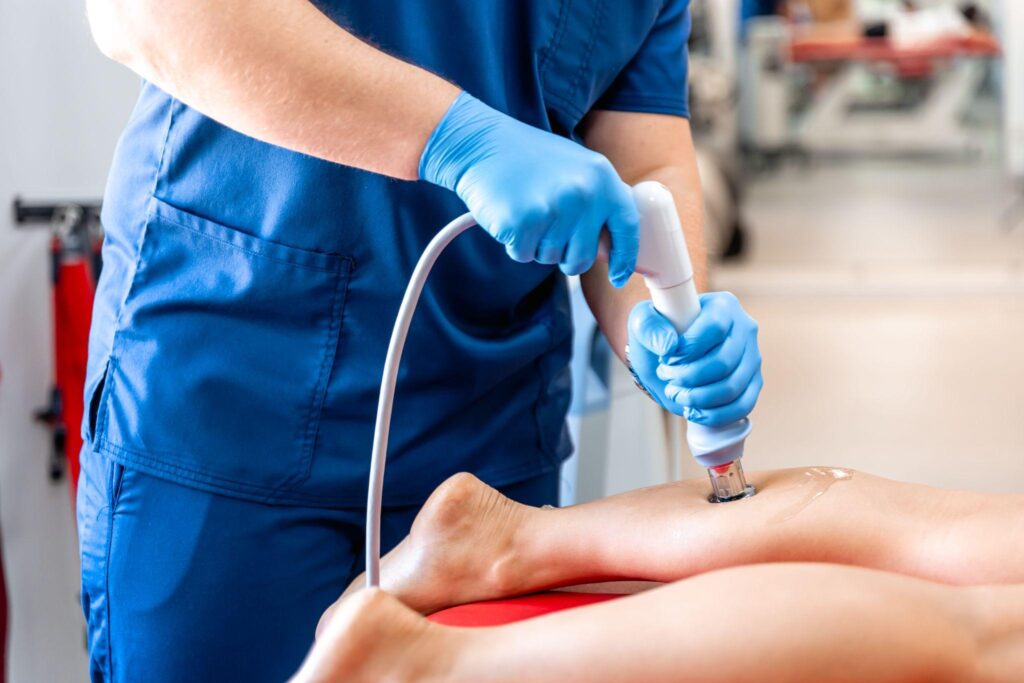
How Does Radial Shockwave Therapy Work?
Radial shockwave therapy works by creating controlled microtrauma in damaged tissue. While “microtrauma” may sound alarming, this process stimulates the body’s natural healing response.
Biological effects include:
1. Increased Blood Flow
Shockwaves improve circulation to damaged tissue, which helps deliver oxygen and nutrients essential for healing.
2. Tissue Regeneration
The therapy stimulates collagen production, which is vital for tendon and ligament repair.
3. Breakdown of Calcification
For calcific tendonitis, radial shockwave can help break down calcium deposits.
4. Pain Reduction
It may reduce pain by overstimulating nerve endings and lowering pain signal transmission.
5. Improved Mobility
As inflammation and pain decrease, movement often improves.
Does Radial Shockwave Therapy Really Work? What Does the Evidence Say?
Clinical Evidence in the UK and Globally
Research supports radial shockwave therapy for several chronic pain conditions, especially where symptoms persist longer than 3–6 months.
Strong evidence exists for:
Plantar Fasciitis
Studies consistently show significant pain reduction and functional improvement.
Achilles Tendinopathy
Many patients report improved tendon strength and reduced pain.
Tennis Elbow
Evidence suggests radial shockwave can reduce pain and improve grip strength.
Calcific Shoulder Tendonitis
Effective in many cases when physiotherapy alone is insufficient.
Success Rates: What Can Patients Expect?
Success rates vary depending on diagnosis, treatment protocol, and patient compliance.
Typical reported improvement:
- Plantar fasciitis: 60–80%
- Tennis elbow: 65–90%
- Achilles tendinopathy: 60–80%
- Calcific tendonitis: 70–85%
Important note:
Shockwave therapy is not usually an instant fix. Most patients need 3–6 sessions spaced weekly, with gradual improvement over weeks or months.
Who Is a Good Candidate for Radial Shockwave Therapy?
You may benefit if:
- You have chronic tendon or soft tissue pain
- Symptoms have lasted more than 3 months
- Conservative treatments have failed
- You want to avoid surgery
- You prefer a non-invasive option
Who Should Avoid Radial Shockwave Therapy?
This treatment may not be suitable if you:
- Are pregnant
- Have blood clotting disorders
- Use anticoagulants
- Have nerve disorders
- Have cancer in the treatment area
- Have acute fractures or infections
Always consult a qualified healthcare professional before beginning treatment.
Does Radial Shockwave Therapy Hurt?
Most patients describe it as uncomfortable rather than painful. The sensation can feel like rapid tapping or pulsing over sore tissue.
Pain levels depend on:
- Area treated
- Tissue sensitivity
- Energy setting
- Condition severity
Sessions usually last 15–20 minutes.
Side Effects and Risks
Radial shockwave therapy is generally considered safe.
Common side effects:
- Temporary redness
- Mild swelling
- Bruising
- Tenderness for 24–48 hours
Serious complications:
Rare when performed by trained professionals.
Radial Shockwave Therapy vs Steroid Injections
Shockwave Therapy:
- Non-invasive
- Encourages natural healing
- No tissue weakening
- Multiple sessions needed
Steroid Injection:
- Faster short-term relief
- Can weaken tendons with repeated use
- Higher recurrence in some conditions
For long-term tendon healing, many UK practitioners increasingly favour shockwave therapy.
How Much Does Radial Shockwave Therapy Cost in London, UK?
Prices vary depending on clinic reputation and practitioner experience.
Typical costs:
- Single session: £50–£120
- Course of 3 sessions: £150–£300
- Course of 6 sessions: £300–£600
Private healthcare can offer quicker access than NHS pathways.
Can You Get Supportive Care at Home During Recovery?
For some patients—especially those with mobility issues, post-treatment discomfort, or complex medical needs—private in-home care can be a practical solution.
If you need injections, rehabilitation support, or mobile nursing services while managing pain conditions, accessing trusted home healthcare can reduce travel stress.
For those seeking professional private nursing services, injections, or mobile nurse appointments in London, UK, trusted providers such as Proback may offer convenient home visit options for personalised care.
Private Nurse for Injection & Home Visit Near London, UK
Modern healthcare increasingly prioritises convenience, especially for busy professionals, elderly patients, or those recovering from musculoskeletal treatment.
Benefits of booking a private nurse near you:
- At-home injections
- Medication administration
- Post-treatment support
- Wound care
- Elderly support
- Reduced clinic visits
- Flexible scheduling
Why London patients choose mobile nurse appointments:
- Traffic and transport avoidance
- Same-day convenience
- Greater privacy
- Personalised healthcare
Is Radial Shockwave Therapy Available Through the NHS?
In some cases, yes—but access can vary significantly by region and condition severity.
NHS limitations:
- Long waiting times
- Referral requirements
- Restricted eligibility
Private clinics often provide faster access.
How to Maximise Results from Shockwave Therapy
Best practices:
- Follow physiotherapy guidance
- Complete prescribed sessions
- Avoid overloading tissue too early
- Stretch consistently
- Wear supportive footwear if relevant
- Stay hydrated
Frequently Asked Questions
How long does it take for radial shockwave therapy to work?
Most people notice improvements after 3–6 sessions, though full healing can take 6–12 weeks.
Is radial shockwave therapy permanent?
Results can be long-lasting if underlying biomechanical causes are addressed.
Can radial shockwave therapy fail?
Yes. Not all conditions respond equally, and severe structural damage may require alternative treatments.
Is it worth paying privately?
For chronic pain sufferers seeking quicker treatment, private therapy can often be worthwhile.
Expert Opinion: Is Radial Shockwave Therapy Worth It?
For many UK patients dealing with chronic tendon pain, radial shockwave therapy is a scientifically supported, low-risk, and effective treatment option.
It may be especially worthwhile if:
- You want to avoid surgery
- Physiotherapy alone hasn’t helped
- Steroid injections are unsuitable
- You need faster access than NHS waiting lists allow
Yes—radial shockwave therapy works for many people, particularly for chronic tendon and soft tissue conditions.
It is not magic, and it isn’t universal, but when used appropriately by qualified professionals, it can significantly reduce pain, restore function, and improve quality of life.
When paired with expert physiotherapy, rehabilitation, and convenient private healthcare solutions like mobile nursing or home visits in London, patients can often achieve better outcomes with less disruption.
Understanding the Science Behind Radial Shockwave Therapy
To fully answer “Does radial shockwave therapy work?”, it helps to look beyond marketing claims and understand the science that underpins this increasingly popular treatment.
Radial shockwave therapy belongs to a broader category called extracorporeal shockwave therapy (ESWT). Originally developed for breaking down kidney stones (lithotripsy), shockwave technology was later adapted for musculoskeletal medicine when clinicians observed tissue regeneration effects beyond stone fragmentation.
Key physiological mechanisms include:
Mechanotransduction
This is the process by which mechanical energy is converted into biochemical activity inside cells. The acoustic pulses delivered during radial shockwave therapy stimulate cells involved in tissue repair, particularly fibroblasts and tenocytes.
Neovascularisation
Shockwave therapy may encourage the formation of new blood vessels in poorly vascularised tissues, such as tendons. This is particularly valuable because chronic tendon injuries often heal slowly due to limited blood supply.
Reduction in Substance P
Substance P is a neurotransmitter associated with pain. Studies suggest shockwave therapy may reduce local concentrations, helping lower discomfort.
Stem Cell Activation
Some research indicates that shockwaves may stimulate progenitor cells that support tissue regeneration.
Radial vs Focused Shockwave Therapy: What’s the Difference?
Many UK patients are confused by the terms “radial shockwave” and “focused shockwave,” and clinics sometimes use them interchangeably despite meaningful differences.
Radial Shockwave Therapy:
- Broader, more superficial energy distribution
- Better for larger treatment zones
- Common for plantar fasciitis, trigger points, and mild-to-moderate tendon issues
- Often more affordable
Focused Shockwave Therapy:
- Deeper tissue penetration
- More precise targeting
- Often used for calcific shoulder pain or deeper structures
- Usually higher cost
Which is better?
Neither is universally superior—it depends on the diagnosis. For many common soft tissue conditions, radial shockwave therapy can absolutely work when properly indicated.
Conditions Where Radial Shockwave Therapy May Be Less Effective
While the treatment has substantial evidence, it is not equally effective for every pain issue.
It may be less successful for:
- Advanced osteoarthritis
- Complete tendon tears
- Acute injuries requiring immobilisation
- Severe nerve entrapment
- Structural joint degeneration
This is why proper assessment from a physiotherapist, podiatrist, orthopaedic specialist, or sports medicine clinician is essential.
The Patient Journey: What Happens During a Typical Session?
For UK patients considering private radial shockwave therapy, understanding the treatment pathway can reduce anxiety.
Step 1: Assessment
A clinician evaluates:
- Pain duration
- Mobility
- Previous treatments
- Medical history
- Imaging if required
Step 2: Gel Application
A conductive gel is placed on the treatment area.
Step 3: Acoustic Pulse Delivery
A handheld device delivers repetitive pulses.
Step 4: Session Completion
Treatment usually lasts 10–20 minutes.
Step 5: Aftercare Advice
You may be advised to:
- Avoid anti-inflammatory medication immediately after treatment
- Reduce intense exercise temporarily
- Follow strengthening exercises
Does Radial Shockwave Therapy Replace Physiotherapy?
No—this is one of the biggest misconceptions.
Best outcomes often occur when shockwave therapy is combined with:
- Strength training
- Stretching
- Load management
- Footwear correction
- Postural rehabilitation
Think of shockwave therapy as a catalyst, not a standalone miracle.
Plantar Fasciitis and Heel Pain: Why Shockwave Therapy Is So Popular
In the UK, plantar fasciitis is one of the top reasons people seek radial shockwave therapy.
Why it works:
Plantar fasciitis often becomes chronic because the fascia undergoes degenerative changes rather than simple inflammation. Since standard anti-inflammatory approaches may not solve the underlying issue, shockwave therapy’s regenerative effect can be particularly valuable.
Common symptoms:
- Sharp morning heel pain
- Pain after standing
- Tenderness in the arch
- Reduced walking tolerance
Combined treatment plan:
- Shockwave sessions
- Orthotics
- Calf stretching
- Weight management if relevant
Sports Injuries and Athletic Recovery
For runners, footballers, gym enthusiasts, and recreational athletes across London and the UK, radial shockwave therapy has become a common tool for chronic overuse injuries.
Common sports-related uses:
- Runner’s heel pain
- Achilles tendinopathy
- Jumper’s knee
- Hamstring trigger points
- IT band tightness
Why athletes like it:
- No surgery
- Minimal downtime
- Can continue modified training
- Often complements sports rehab
Is There an Age Limit?
Radial shockwave therapy can be used in both younger and older adults, though suitability depends more on medical history than age itself.
Older adults may benefit for:
- Chronic tendon pain
- Reduced mobility
- Calcific tendonitis
Caution:
Bone density, medications, and circulation issues should always be reviewed.
Cost vs Value: Is Private Treatment Worth It in London?
London’s healthcare market offers broad access to private physiotherapy and musculoskeletal clinics, but patients naturally want to know if paying privately is worthwhile.
Potential advantages:
- Faster appointments
- Tailored treatment plans
- More session flexibility
- Better continuity of care
- Combined therapies
Potential downsides:
- Higher upfront expense
- Variable practitioner expertise
Smart tip:
Choose clinics with:
- HCPC registered physiotherapists
- CSP membership
- Evidence-based protocols
- Transparent pricing
Recovery at Home: Why Integrated Home Healthcare Matters
Managing chronic pain often extends beyond the clinic. This is where mobile healthcare solutions are increasingly valuable in the UK.
For patients balancing work, elderly care, post-procedure needs, or mobility limitations, booking private nurse home visits in London can support treatment continuity.
Home visit nursing can assist with:
- Prescription injections
- Pain management plans
- Mobility support
- Chronic condition monitoring
- Rehabilitation compliance
This can be especially relevant for patients recovering from orthopaedic procedures, sports injuries, or broader musculoskeletal conditions.
For convenient professional support, London residents may explore private home healthcare solutions through providers such as Proback UK.
The Growing Trend of Mobile Nurse Appointments in London
Healthcare consumer behaviour in the UK has shifted significantly, with more patients valuing flexibility and convenience.
Reasons demand is growing:
Busy Professionals
Long clinic waits don’t fit demanding schedules.
Parents
At-home care can reduce childcare disruption.
Elderly Patients
Travel can worsen pain or fatigue.
Post-Injury Recovery
Reduced movement requirements can improve comfort.
Common Myths About Radial Shockwave Therapy
Myth 1: It’s just a massage machine
False. It uses acoustic energy with biological healing effects.
Myth 2: One session fixes everything
False. Most conditions need structured treatment.
Myth 3: It’s unsafe
False. It’s generally safe when clinically appropriate.
Myth 4: It only works for athletes
False. Everyday chronic pain sufferers often benefit.
Questions to Ask Before Starting Treatment
Before booking, ask:
- What condition am I specifically treating?
- Is radial or focused shockwave more appropriate?
- How many sessions are recommended?
- What are the expected outcomes?
- What complementary rehab is required?
- Are there contraindications?
Google People Also Ask Style FAQs
Can radial shockwave therapy cure plantar fasciitis?
It can significantly improve symptoms and function, particularly in chronic cases, though biomechanical correction is also important.
How painful is radial shockwave therapy?
Most patients tolerate it well, with manageable discomfort.
Is shockwave therapy better than steroid injections?
For long-term tendon healing, many clinicians believe it may offer advantages.
How soon can I walk after treatment?
Usually immediately, though strenuous activity may be modified.
Can I have shockwave therapy at home?
The treatment itself is usually clinic-based, but supportive private nursing and rehabilitation can often be arranged at home.
Building Topical Authority: The Bigger Healthcare Context
Google increasingly rewards content that demonstrates expertise, authority, and user-focused depth. In the context of radial shockwave therapy, this means understanding not only the treatment itself but also adjacent healthcare pathways.
Related topical map:
- Chronic pain management
- Sports rehabilitation
- Physiotherapy
- Orthopaedics
- Home healthcare
- Private nursing
- Injection services
- London private healthcare access
By integrating treatment education with practical healthcare solutions, patients gain a fuller understanding of recovery options.
Final Expert Insight
So, does radial shockwave therapy work?
For the right patient, with the right diagnosis, and the right provider—yes, often very well.
Its growing popularity across the UK is not just hype. It reflects increasing clinical confidence in regenerative, non-invasive care for chronic tendon and musculoskeletal pain.
However, the most effective outcomes typically come from a broader care ecosystem:
- Accurate diagnosis
- Evidence-based therapy
- Structured rehabilitation
- Lifestyle adjustments
- Convenient support services when needed
For patients in London seeking both advanced treatment pathways and practical at-home support, combining modern therapies with trusted services like Proback UK may provide a more seamless route to recovery, mobility, and better quality of life.
In a healthcare world increasingly centred on convenience, expertise, and patient empowerment, radial shockwave therapy represents one promising piece of a much larger recovery puzzle.