


How do I decompress my spine at home?
Back pain is one of the most common health concerns among adults. Whether caused by prolonged sitting, poor posture, sports injuries, or chronic conditions, spinal compression can significantly affect daily life and mobility.
Many people looking for natural relief ask a simple question: how can I decompress my spine at home?
Spinal decompression involves techniques that reduce pressure on the spinal discs and nerves by gently stretching and lengthening the spine. While professional treatments such as chiropractic spinal decompression and K Laser Therapy are highly effective, there are also safe and practical methods you can use at home to support spinal health.
Home-based techniques may help to reduce pressure on spinal discs, improve posture, relieve nerve irritation, ease muscle tension, and enhance circulation. However, these methods are supportive rather than a replacement for clinical treatment. Persistent or severe symptoms should always be assessed by a qualified professional.
This guide explains how spinal decompression works, why compression causes pain, and the safest ways to support your spine at home.
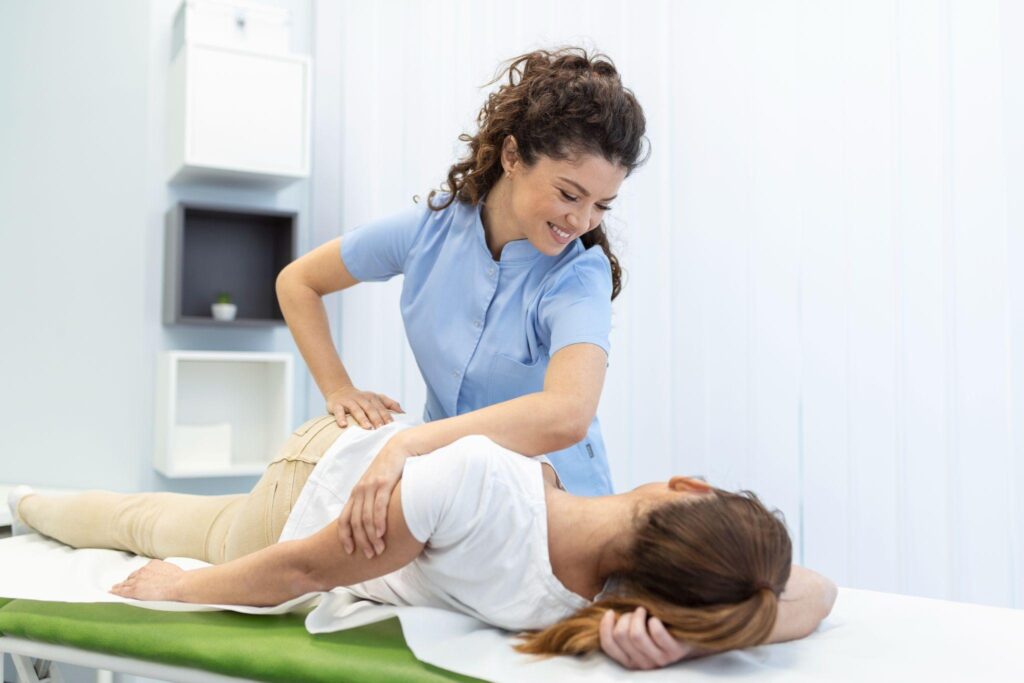
What Is Spinal Decompression?
Spinal decompression refers to techniques designed to relieve pressure within the spinal discs and joints. The aim is to create space between the vertebrae, allowing compressed discs and irritated nerves to recover.
The spine consists of vertebrae separated by soft discs that act as shock absorbers. These discs enable movement and flexibility while protecting the spine from impact. Over time, everyday activities can place excessive stress on these structures.
Common causes of spinal compression include poor posture, prolonged sitting, heavy lifting, repetitive strain, sports injuries, ageing, and muscle tightness. When discs become compressed, they may bulge or press against nearby nerves, leading to lower back pain, neck stiffness, sciatica, and reduced mobility.
Decompression techniques help relieve this pressure and restore balance within the spine.
Can You Decompress Your Spine at Home?
You can support spinal decompression at home through gentle stretching, mobility exercises, posture correction, and lifestyle adjustments.
It is important to understand the difference between home-based methods and professional treatment. Home techniques focus on relieving mild tension and improving flexibility, while clinical spinal decompression uses specialised equipment to apply controlled traction to the spine.
For conditions such as herniated discs, nerve compression, or chronic pain, professional care may be required. Home methods are most effective when used consistently as part of a broader spinal health routine.
Benefits of Spinal Decompression
Spinal decompression, whether performed at home or in a clinical setting, may provide several benefits.
Patients often experience reduced pressure on spinal discs, improved posture, better mobility, decreased muscle tension, and relief from nerve irritation. Improved circulation around spinal tissues can also support healing.
When combined with advanced therapies such as K Laser Therapy, decompression may further enhance recovery by reducing inflammation and promoting tissue repair.
7 Safe Ways to Decompress Your Spine at Home
The following techniques can help relieve pressure on the spine when performed carefully. Movements should always be slow and controlled. Stop immediately if you experience pain.
1. Hanging from a Bar
Using gravity to stretch the spine is one of the simplest decompression methods.
Hold a pull-up bar with both hands and allow your body to hang naturally. Keep your shoulders relaxed and hold for 20 to 30 seconds. This technique may help reduce disc pressure and improve upper body mobility.
2. Child’s Pose Stretch
This gentle stretch lengthens the spine and reduces tension in the lower back.
Kneel on the floor, sit back onto your heels, and extend your arms forward while lowering your chest. Hold for up to one minute. This movement is particularly beneficial after long periods of sitting.
3. Knees-to-Chest Stretch
This exercise helps open the lower spine and relieve stiffness.
Lie on your back, pull both knees towards your chest, and hold for 30 seconds. Keep your back relaxed throughout the movement. It may help improve circulation and reduce tension.
4. Cat-Cow Movement
A controlled spinal mobility exercise that improves flexibility.
Begin on your hands and knees. Slowly arch your back upwards, then lower it while lifting your head. Repeat for 10 to 15 repetitions. This movement encourages blood flow and reduces stiffness.
5. Foam Rolling
Foam rolling targets muscle tightness around the spine.
While it does not directly decompress the spine, it helps release tension in surrounding muscles, which can reduce pressure on spinal structures and improve mobility.
6. Pelvic Tilts
This exercise strengthens core muscles and supports spinal alignment.
Lie on your back with knees bent, tighten your abdominal muscles, and gently press your lower back into the floor. Hold for a few seconds and repeat. A stronger core helps stabilise the spine.
7. Posture Correction
Improving posture is essential for reducing spinal compression.
Keep your shoulders relaxed, align your ears over your shoulders, and avoid slouching. Use supportive seating where possible and take regular breaks from sitting.
The Role of K Laser Therapy in Spinal Recovery
While home techniques can support spinal health, some patients benefit from advanced treatments such as K Laser Therapy.
This therapy uses targeted light energy to stimulate cellular activity and promote healing in muscles, ligaments, and soft tissues. It works through photobiomodulation, enhancing circulation and reducing inflammation.
Patients often report faster recovery, reduced pain, improved mobility, and relaxation of tight muscles. When combined with spinal decompression therapy, it may enhance overall treatment outcomes.
When Home Decompression Is Not Enough
Home methods are helpful for mild discomfort but may not be sufficient for more serious conditions.
You should seek professional care if you experience persistent pain, radiating nerve pain, herniated discs, reduced mobility, or worsening symptoms. Clinical treatments can address the underlying cause rather than simply managing symptoms.
Benefits of Professional Spinal Decompression
Compared to home techniques, professional spinal decompression offers targeted and controlled treatment.
Patients may benefit from improved disc hydration, reduced nerve compression, and longer-term relief. When combined with therapies such as K Laser Therapy, outcomes may be further improved through enhanced healing and reduced inflammation.
Tips for Maintaining a Healthy Spine
Long-term spinal health depends on consistent habits.
Stay physically active, strengthen your core, maintain good posture, lift objects carefully, and avoid prolonged sitting without breaks. These practices reduce stress on the spine and help prevent recurring issues.
Conclusion
Spinal decompression is an effective way to relieve pressure on discs and nerves, supporting pain relief and improved mobility. Simple home techniques such as stretching, posture correction, and mobility exercises can help reduce daily discomfort and support spinal health.
However, individuals with ongoing or severe symptoms may require professional care. Combining home strategies with clinical treatments can provide the most effective and lasting results.
Experience advanced care for spine-related issues. Spinal decompression helps relieve pressure and pain naturally. It promotes healing without surgery or medication. Book your consultation with Proback today.