



Prolotherapy for Shoulder Joint Pain
Shoulder Joint
The shoulder is one of the most mobile joints in the body. It is also one of the body’s most unstable joint.
Shoulder instability due to ligament damage is often a common cause of shoulder pain. Shoulder instability often goes undiagnosed for years.
Typically, patients receive cycles of degenerative treatments like cortisone injections and ibuprofen to mask pain, or rounds of physiotherapy to address the muscles but these therapies will not address the cause of the pain and unfortunate fail to correct ligament laxity and degeneration.
Prolotherapy may effectively eliminate both acute and chronic shoulder pain without surgery.
Our team of practitioners in London helps all types of shoulder conditions including osteoarthritis, rotator cuff tear, ac sprain, glenoid labrum tear, frozen shoulder, tendinopathy, and more.


Symptoms caused by Shoulder Instability
- Crepitation (cracking) with movement
- Loss of shoulder range of motion
- Shoulder weakness
- Muscle spasms and tightness
- Shoulder pain
- Shoulder popping
These symptoms can be signs of the following shoulder pain conditions caused by shoulder instability and respond well to Prolotherapy.

Prolotherapy for Shoulder Joint
In order to fix shoulder joint instability, the ligamentous and capsular structures need to be strengthened.
The glenoid labrum is the main capsular structure responsible for the stability of the shoulder joint. It holds the humerus bone to the glenoid cavity of the scapula.
Weakness in the supraspinatus tendon, acromioclavicular ligament laxity, a weakness in the glenohumeral ligament, are also common reasons for shoulder joint instability. Furthermore, acromioclavicular ligament laxity, a weakness of structures that attach to the coracoid process can be other caused of shoulder joint instability.
A shoulder is usually unstable because these structures are stretched and are partially torn.
If any of those structure these structures are stretched or loosened, exercise will not be sufficient to help the shoulder joint permanently hold it in place.

Biceps Tendon
The biceps tendon slides into a grove and is stabilized and supported by the superior glenohumeral ligament, the coracohumeral ligament, and the distal attachment of the subscapularis tendon.
With shoulder instability it is common that the capsuloligamentous complex that makes up the biceps pulley system in also injured. This can result in any type of biceps tendon pain which can lead to tears, degeneration, or calcification.
Prolotherapy injections are a more advanced, yet non-surgical, approach that directly stimulate repair of the structures.
The injections are done around the entire shoulder and depend on where the weakness and instability are located directly to the ligament and tendon attachments.
Since ligaments do not receive direct blood flow, Prolotherapy allows for tissue regeneration and healing.
Usually, within a few treatments (3 to 6), the ligaments, tendons and capsule have strengthened enough to reduce or eliminate pain and provide a stability to the muscles to allow the patient to become active again. Prolotherapy is an idea form of treatment for athletes and those who do physical work.
Prolotherapy of the Shoulder

Arthritic Pain
Osteoarthritis is one of the most diagnosed joint diseases in the world. Patients usually experience chronic joint pain, joint stiffness, leading to weakness.
What most people do not realize is that cartilage loss could be due to the long-term joint instability from unresolved ligament trauma. Every time the joint moves, a wear and tear of the cartilage happens leading to the development of osteoarthritis.
Our practitioners can assess your joints and see if Prolotherapy can help you. Prolotherapy could even help you in case of residual pain following a joint replacement.
Our specialists treat osteoarthritis of most joints, including knees, shoulders, fingers, toes, ankles, and wrists, as well as the spine.
Symptoms Caused by Arthritis
- Crepitation (cracking) with movement
- Deep, aching joint pain
- Grinding sensation
- Joint swelling and tenderness
- Loss of muscle strength
- Muscle tenderness
- Reduced range of movement
- Stiffness

How Ligaments and Tendons Injuries Lead to Degenerative Arthritis
Following an injury, like a fall, a sport injury or a car accident, it is very common for ligaments become sprained and injured. If left untreated, chronic joint instability can lead to destructive joint motion ultimately leading to extensive degenerative changes and osteoarthritis.
Often, destructive joint motion and the joint degenerative process can be prevented with appropriate intervention through Prolotherapy.
New view of Pathophysiology of Osteoarthritis
Often, osteoarthritis, or degeneration of a joint or spine, starts with ligament injury. Prolotherapy could be a great solution to joints and ligaments injuries.
Hopefully, over time, traditional medicine will accept Prolotherapy further as a part of generative medicine.
⇒ Ligament injury (laxity and partial tear)
⇒ Decreased tension on the bone at ligament-bone insertion site
⇒ Altered joint movement (instability) – increased force on subchondral bone
⇒ Subchondral bone sclerosis (thickening)
⇒ Reduction in shock absorbing bone capacity
⇒ Increase pressure between the cartilage surfaces
⇒ Cartilage wear and tear and subsequent joint degeneration worsens
⇒ Cartilage breaks off (loose bodies) and bone spurs form to try to stabilize joint
Regenerative injection technique such as Prolotherapy helps stimulate repair and integrity of ligaments, ligament bone junction which is often the primary source of the pain.
Most importantly, Prolotherapy initiate cartilage repair.

Prolotherapy for Arthritic Pain
Degenerative vs. Regenerative cascade. Traditional medical treatments often intensify the degenerative cascade whereas Prolotherapy restores joint physiology and biomechanics.
FAQs
Disc problems and nerve impingement in the neck is a very common cause of radiating pain into the shoulder. Poor posture is also an extremely common way of developing shoulder pain. When the head carries further forward, pectoral muscles can become tighter meaning the muscles in the shoulder have to work harder. Moreover, when the head is further forward, this can increase the amount of weight the shoulders have to hold, making them at risk of injury.
We would always recommend coming to the clinic for an examination to find out exactly what’s wrong with your shoulder before suggesting exercises. Once shoulder pain levels have decreased enough to improve flexibility and range of motion, we can then give you specific exercises tailored to your needs. This will help to improve the longevity of your treatment outside of the clinic and contribute towards lasting shoulder pain relief.
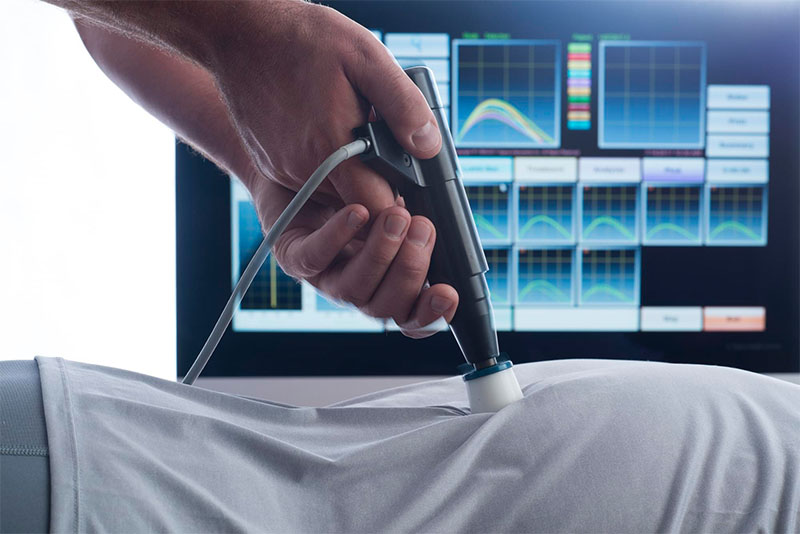
Pain caused by a problem within the shoulder can lead to a build up of scar tissue, causing stiffness, decreased range of motion, reduced blood flow into the area. Shockwave therapy can help to break down the scar tissue, improve movement and reduce shoulder pain. Shockwave therapy can also increase the blood flow to the area, creating a much better healing environment for your shoulder to start repairing itself. Shockwave is especially effective with patients suffering from frozen shoulder.
On your first visit to the clinic, we will give you a full, thorough consultation. This will include a number of physical tests, and x-rays may be taken on the day. The following session will involve reviewing your results, and telling you exactly what’s wrong with your shoulder, which treatment(s) would give you the best relief and how many sessions we think you’ll need.
Use the form below to book a consultation.
Consultation includes examination, x-ray (if required) and results.
We typically reply within 60 minutes during opening hours.
Award-Winning Treatments
Gentle Non-Surgical Chiropractic Therapy



Patient Stories
9/10 Recommend Us


SYMPTOMS
Back Pain

TREATMENT
Spinal Decompression Therapy
Whilst working on her dad’s farm, 17 years ago, Sandra heard a loud crack in her back. Sandra had 6 steroid injections. She tried Physiotherapy, acupuncture and more but nothing helped. She kept getting worse and worse. The effect the pain was having spread beyond just Sandra. It was hurting everyone who loved her.
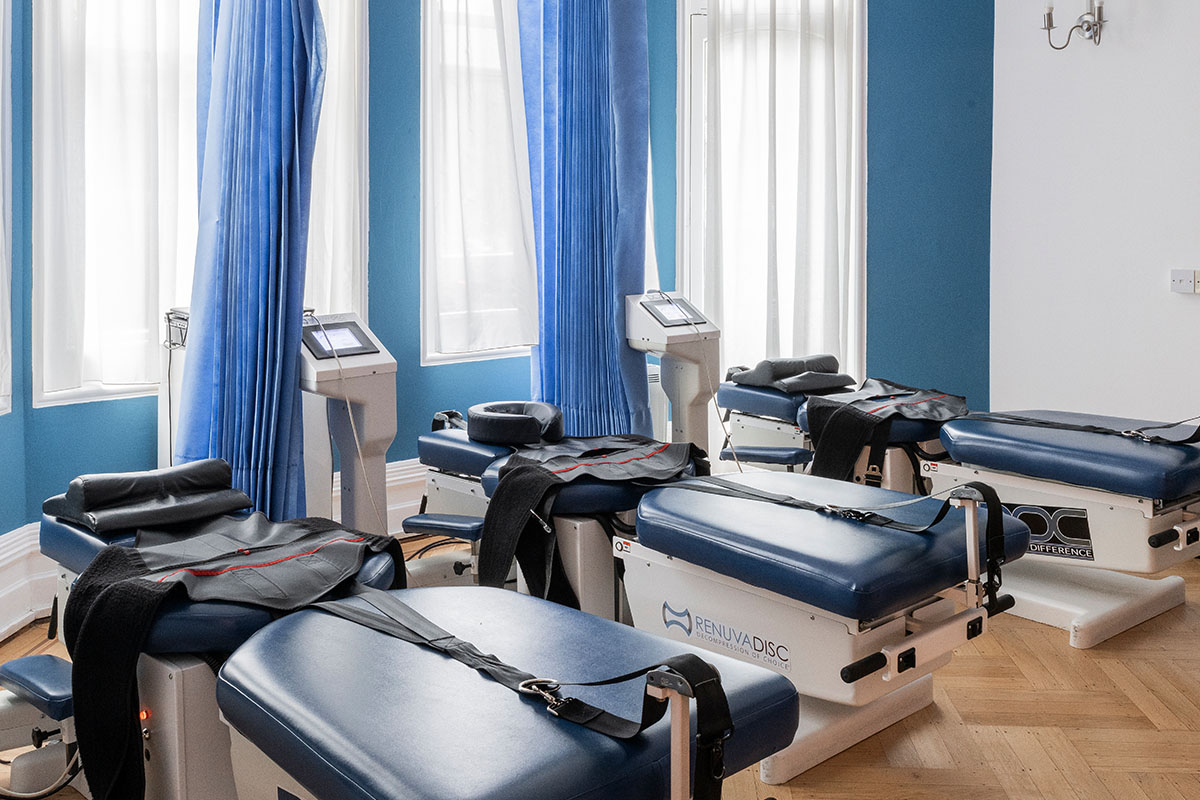
Inside Proback
5 Minutes From London Victoria Station










Use the form below to book a consultation.
Consultation includes examination, x-ray (if required) and results.
We typically reply within 60 minutes during opening hours.
Accreditations


How To Find Us
Flat 4, Evelyn Mansions,
Carlisle Place, Westminster,
London, SW1P 1NH
Opening Times
Weekdays 8.30am - 8pm
Saturday 9am - 3pm

020 7976 6648


